How Colorado Passed Plug-in Solar Legislation — and Set the Highest Wattage Limit
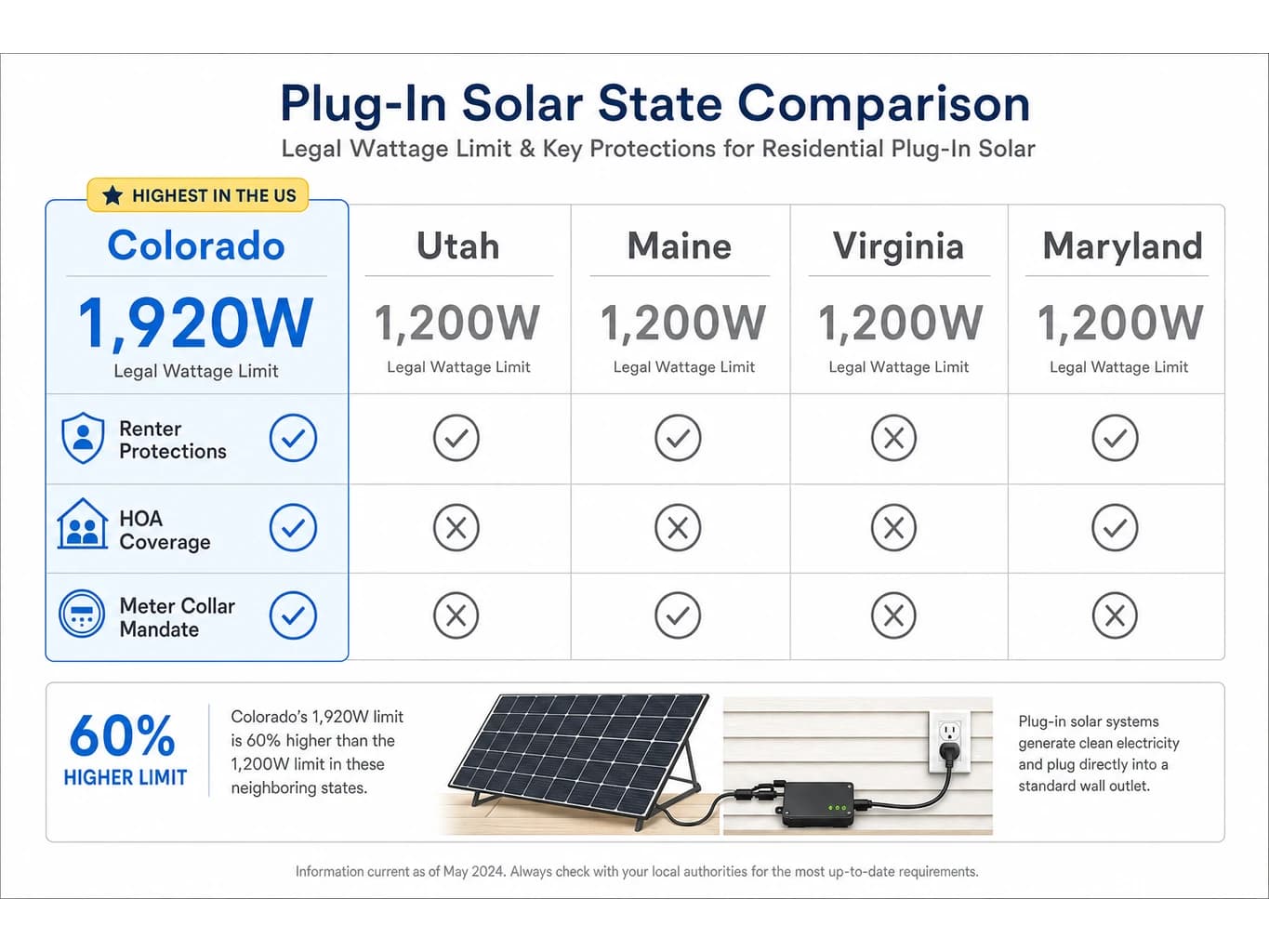
Governor Jared Polis signed HB26-1007 on May 7, 2026. It takes effect August 12, 2026, with three features that set Colorado apart: the highest wattage limit in the nation (1,920 watts), a mandate that utilities accept meter collar adapters (saving homeowners up to $5,000 on installation), and explicit protections for renters and HOA members. Here's how it passed and what it means for Colorado families.

What Did Colorado's Plug-in Solar Law Actually Change?
When HB26-1007 takes effect on August 12, 2026, it will eliminate the interconnection approval process for qualifying plug-in solar systems and prohibit utility approval requirements. It allows systems up to 1,920 watts, subject to the law's certification requirements.
Before HB26-1007, Colorado landlords could reject plug-in solar under "no modifications" lease clauses, and HOAs could prohibit exterior attachments under architectural guidelines. The law ended both barriers.
Unlike rooftop solar — which requires owner permission, electrical permits, and often tens of thousands in installation costs — plug-in solar can now sit on a balcony or in a yard, generating $20–$50 per month in bill savings for an 800-watt system. You own it. You can take it with you when you move.
Colorado's approach is also friendlier to homeowners with older electrical panels. By mandating that utilities accept meter collar adapters, the law lets you add solar without the $5,000–$10,000 electrical panel upgrade that has stopped many solar projects before they started. That detail separates Colorado from Utah's approach.
How HB26-1007 Came Together: A Legislative Timeline
The bill moved fast. Four months from introduction to Governor's signature is quick for solar legislation.
January 14, 2026
HB26-1007 introduced in the Colorado House.
February 26, 2026
House Energy & Environment Committee adopted amendments; the bill advanced with bipartisan support.
March 5, 2026
House floor vote: 48-16 passed. Strong support, with opposition centering on utility concerns about grid stability and fire safety.
April 2, 2026
Senate floor vote: 29-4 passed. Even stronger Senate support — just four "no" votes, suggesting amendments addressed most concerns.
April 14, 2026
Final passage from both chambers, sent to Governor Polis for signature.
May 7, 2026
Governor Polis signed the bill into law. The plug-in solar provisions take effect August 12, 2026.
The 48-16 House margin and 29-4 Senate margin show this was not a partisan fight. Republican and Democratic caucuses both aligned on giving renters solar access. Utah's two-plus years of real-world data helped: no fires, no grid instability, utilities satisfied. Colorado's utilities came to the table with fewer objections partly because that track record existed.
The UL 3700 safety standard (launched January 2026) also gave lawmakers a nationally recognized certification path to reference rather than writing their own technical rules. To understand why certification matters, see our UL 3700 explainer →
Why Does Colorado Allow 1,920 Watts When Other States Stop at 1,200?
A standard 120-volt US outlet can safely carry 20 amps continuously. The National Electrical Code says you shouldn't load a circuit above 80% of its rated capacity: 20A × 120V × 80% = 1,920W. That's not a political choice — it's the physics ceiling for a standard outlet. Utah, Maine, and Virginia set their caps at 1,200W, which is conservative but understandable for early legislation. Colorado went all the way to the code limit, giving you 60% more panel capacity.
The two-tier structure matters too. Devices under 391 watts skip certification entirely — they're too small to pose a meaningful fire or electrical overload risk. Anything larger must be certified, which ensures anti-islanding safety (the system shuts down instantly if the grid goes down) and dead-prong protection (you won't get shocked when unplugging). That requirement is why you need UL 1741 SB or UL 3700 certified equipment — not just any panel plugged into any outlet.
| System size | Monthly output (Colorado avg) | Monthly savings |
|---|---|---|
| 800W (1 panel) | ~100 kWh | ~$20 |
| 1,200W (2 panels) | ~150 kWh | ~$30 |
| 1,920W (3–4 panels) | ~240 kWh | ~$48 |
Estimates assume Colorado's average residential electricity rate of ~$0.20/kWh. Actual savings depend on your sun exposure, local utility rate, and panel choice.
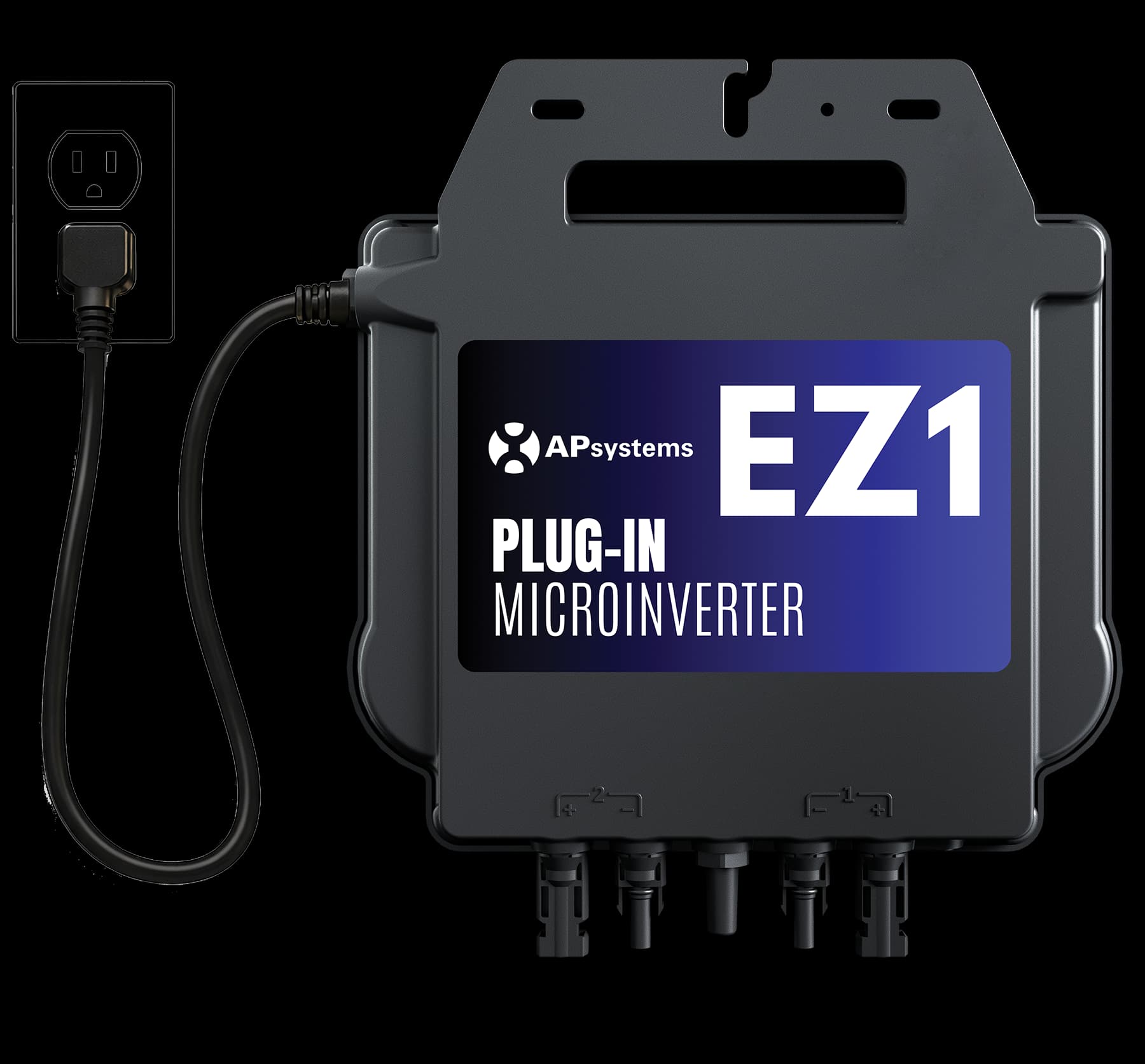
The first UL 3700-certified microinverter, the APsystems EZ1, reached the market in July 2026, and systems with UL 1741 SB certified microinverters also meet Colorado's requirement. That's the trade-off for 1,920 watts: you need verified equipment, but you get meaningfully more power than in any other state.
Want to see what your specific savings could be? Try our free savings calculator → to estimate what a system would save in your neighborhood and how long it'd take to recoup the upfront cost.
Meter Collar Adapters: How Colorado Is Solving the Installation Cost Problem
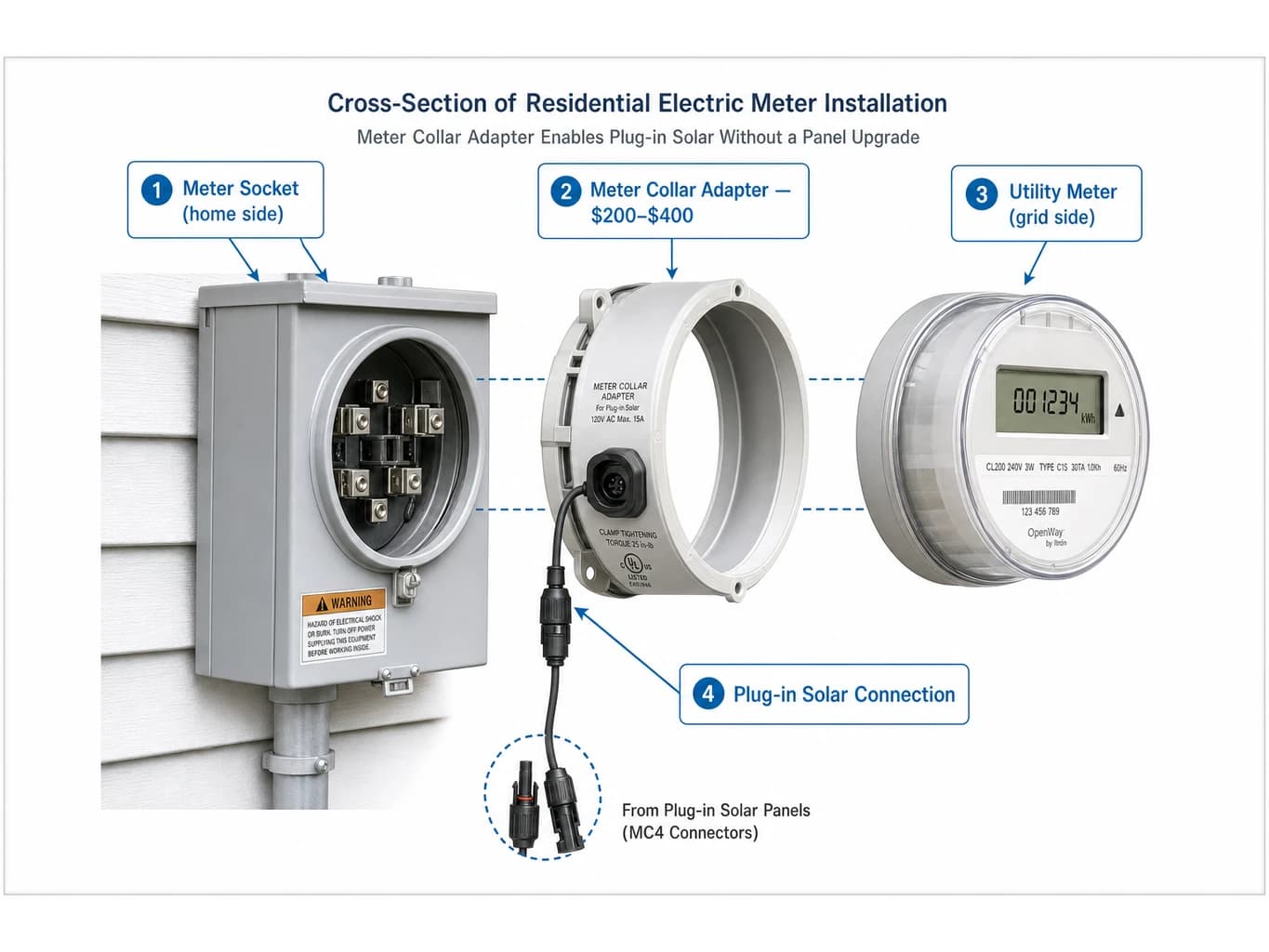
Meter collar adapters are small devices installed between your home's electric meter socket and the utility's billing meter. They create a junction point for your solar system to feed power back to the grid. They cost $200–$400 and take about 30 minutes to install. No electrician needed.
Without meter collar mandates, you'd need to upgrade your electrical panel to add solar — a project costing $5,000–$10,000 and requiring a licensed electrician, permits, and utility inspection. That cost has stopped countless solar projects, especially for renters and apartment dwellers who can't absorb that kind of upfront investment.
HB26-1007 requires Colorado utilities to update their interconnection rules by December 31, 2026, to explicitly allow meter collar adapters. That means Xcel Energy, Black Hills Energy, municipal utilities, and electric cooperatives across the state must accept them. No more "sorry, we don't allow that device" from utilities — it's now required by law.
A homeowner who skips the panel upgrade saves $5,000–$10,000 on electrical work — enough to buy a complete 1,200-watt plug-in system with money to spare. For renters, the meter collar mandate might be the difference between "I can afford this" and "it's out of reach."
Who Can Install Plug-in Solar in Colorado — Renters, Homeowners, and HOA Members?
Colorado's law covers three groups, each with slightly different rules.
Renters
You can install plug-in solar on your balcony or patio without owner permission. You must notify your landlord, but they can't simply say no. Landlords can set reasonable rules about fire and electrical safety — but they can't outright block installation. If your landlord refuses and you believe they're being unreasonable, you have legal standing to push back under the law.
See our guide on how to ask your landlord for plug-in solar permission → for how to have that conversation, including a fill-in-the-blank permission letter and tips for handling initial refusals.
Homeowners
You own your home, so there's no landlord to notify. If you're in an HOA-governed community, read the card below — that's where restrictions might still come from. Otherwise, your main steps are selecting certified equipment and confirming your utility's meter collar adapter timeline with a quick phone call.
HOA members
Your HOA cannot prevent you from installing a properly attached and secured plug-in solar system. This is critical because Colorado has more HOA-governed communities than most states — especially in Denver and Boulder metro areas. If your HOA says "no solar," that's now illegal under HB26-1007.
HOAs aren't expected to encourage solar — just to allow it safely. Bring the law text to your next board meeting if the rules haven't been updated. Advance notice prevents conflict later.
Colorado's Approach vs. Utah's (and Why It Matters)
Utah's HB 340 was the first state plug-in solar law → Colorado studied it carefully. Both laws share the same general approach: legalize plug-in solar, require certification, and protect renters. They differ on three specific points that make a meaningful difference for Colorado families.
| Feature | Colorado (HB26-1007) | Utah (HB 340) |
|---|---|---|
| Wattage limit | 1,920W | 1,200W |
| Renter protections | Explicit; landlord can't prevent | Explicit; same as Colorado |
| HOA restrictions | Prohibited (if properly secured) | Not addressed; varies by HOA |
| Meter collar mandate | Yes; utilities must update rules by Dec 31, 2026 | No specific mandate |
| Utility coverage | Investor-owned, municipals, and co-ops | Investor-owned utilities only (initially) |
| Effective date | August 12, 2026 | 2024 (immediate) |
Utah proved the concept works. Colorado learned from that and added infrastructure (meter collar mandate) and legal clarity (HOA prohibition). Colorado's inclusion of municipal utilities and electric cooperatives also matters: rural Colorado has dozens of smaller cooperatives, and cities like Fort Collins and Longmont run their own municipal utilities. HB26-1007 covers all of them, not just investor-owned utilities.
If you're a Colorado renter in an HOA-governed apartment complex, you're better protected than a Utah renter would have been in 2024. For the full breakdown of permit and approval requirements across all states, see our plug-in solar permit guide →
Colorado Is Part of a Growing State Movement
Colorado's plug-in solar law didn't come out of nowhere. Utah passed HB 340 in 2024 — the first state plug-in solar law — and it was the catalyst. Within 18 months, four more states legalized plug-in solar: Maine (signed April 2026, effective July 2026), Maryland (signed mid-April 2026), Colorado (signed May 7, 2026), and Virginia (both chambers passed, awaiting Governor). Two more states came close without landing: Washington's HB 2296 passed the House before the Senate stripped its plug-in solar provisions, and New York's SUNNY Act cleared the Legislature in late May 2026 and awaits the Governor's signature.
Our tracker currently lists 5 enacted state frameworks, 4 passed bills awaiting their effective date or final action, and 26 bills still moving through legislatures. Three things drove this acceleration. First, Utah proved safety: two-plus years of real-world use with zero fires and no grid instability. Second, UL 3700 (launched January 2026) gave every state a ready-made, nationally recognized certification standard to cite rather than writing their own technical rules. Third, the demographic reality: 43 million Americans rent their homes and can't get rooftop solar. Plug-in solar is the first real option for that population, and legislators across both parties know it.
Colorado's law is setting a new template. Utah set the precedent; Colorado added the infrastructure and legal clarity Utah's bill left incomplete. Virginia and Maryland are likely to do the same, each refining what the state before them got right.
Check all 33+ states and their plug-in solar status → to see where your state stands.
What Can Colorado Residents Actually Do Right Now?
The law passed, but certified products are still scarce. As of May 2026, the first US plug-in solar kits certified under UL 1741 SB are just entering the market. UL 3700 has zero certified products yet — manufacturers expect first systems in late 2026. That doesn't mean wait. Here's what you can do now.
Check your lease or rental agreement
Note any existing solar restrictions. If your lease says 'no modifications without permission,' you're legally required to notify your landlord — but they can't unreasonably refuse under HB26-1007.
Document your sun exposure
Does your balcony or patio get 6+ hours of direct sun daily? Take photos and note the direction. This determines whether a plug-in system makes financial sense for your location.
Contact your utility about meter collar timelines
Xcel, Black Hills, and municipal utilities have until December 31, 2026, to formalize meter collar acceptance in their rules. Some might do it sooner. Calling ahead avoids surprises.
Research certified products
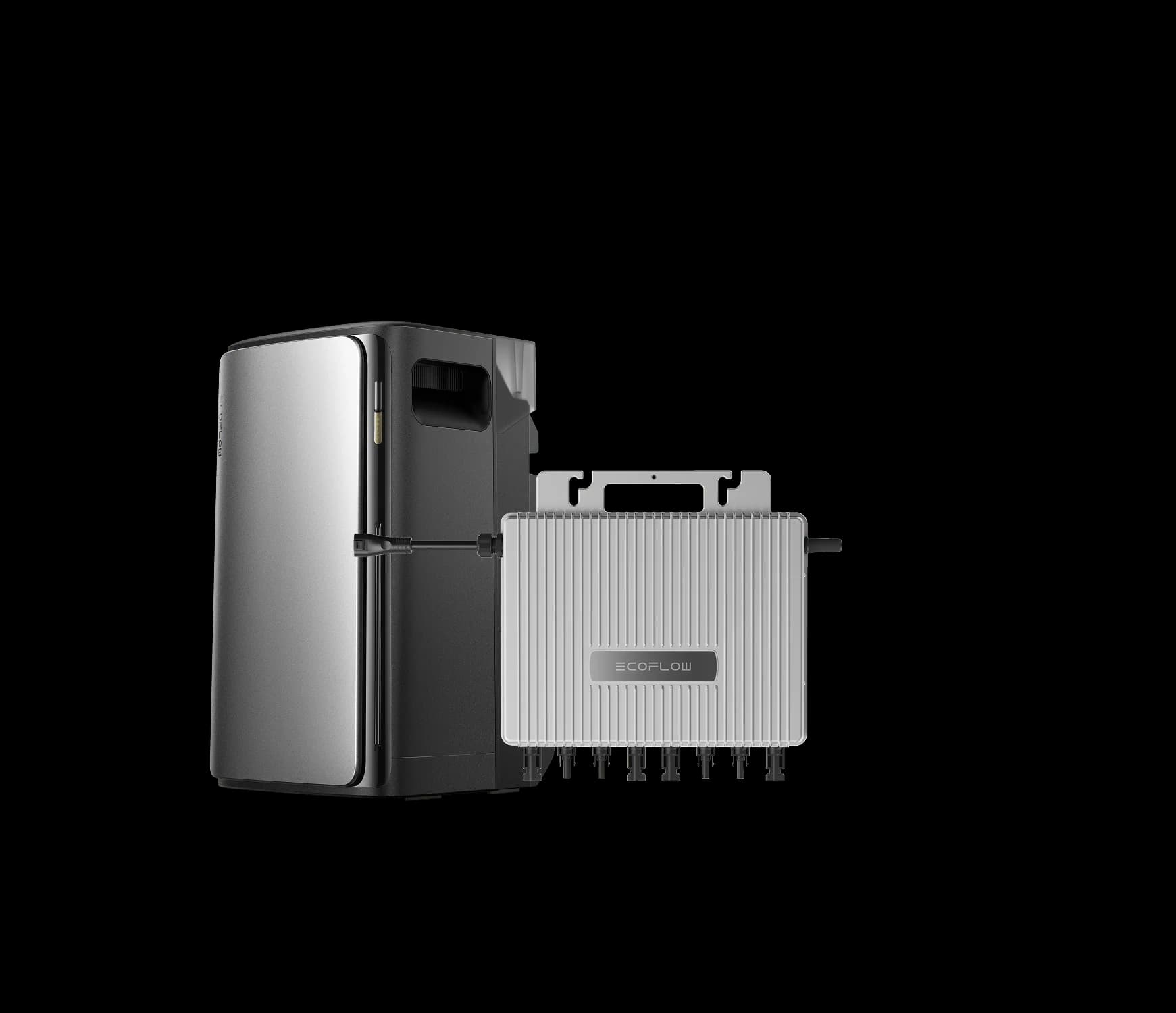
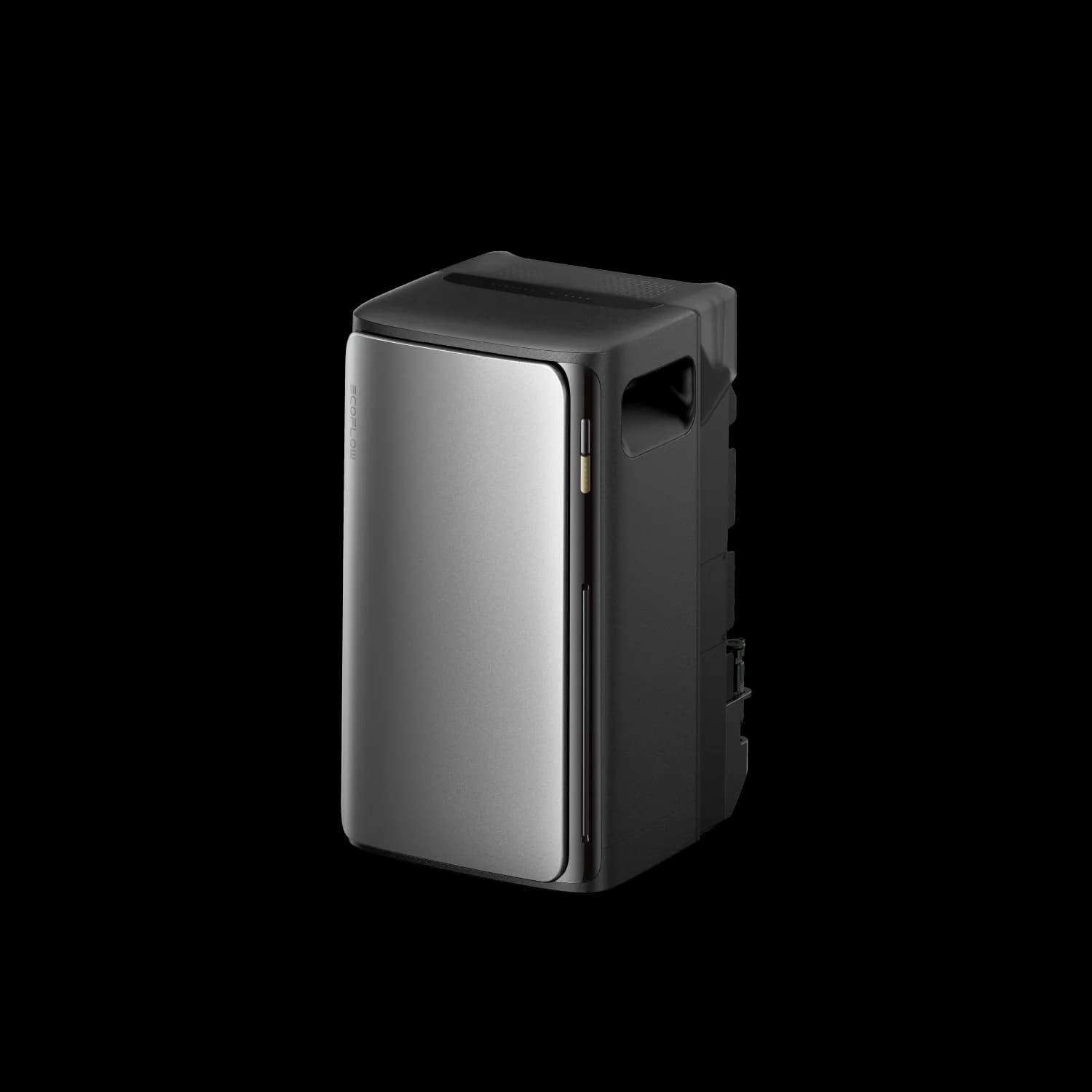
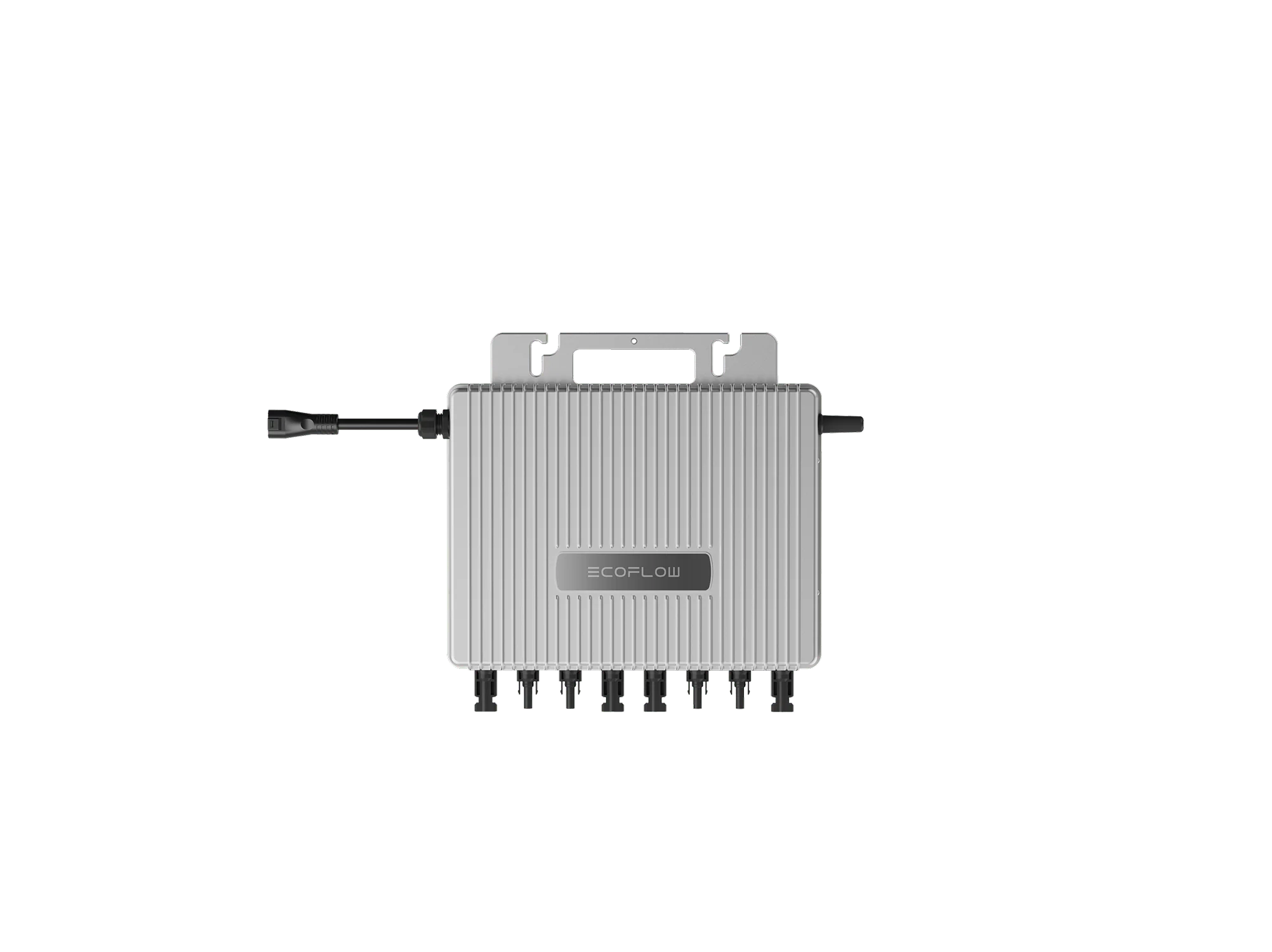
By late summer 2026, first-generation plug-in solar kits should be widely available. APsystems, Craftstrom, EcoFlow, and Zendure are leading brands in the US market.
If you're in an HOA, bring the law to your next board meeting
Give your HOA management a copy of HB26-1007. Many HOAs drafted rules before this law passed. A friendly advance notice prevents conflict later.
For renters: the landlord conversation
It often goes smoothly if you lead with data: "I'm looking at a 400-watt solar system for the balcony. It costs about $600 and saves me $10–$15 a month. It mounts with brackets, not bolts, so it's completely reversible. Could we work out an agreement?" Most landlords say yes when they see it's temporary and doesn't harm the property.
Browse certified plug-in solar systems → for up-to-date availability and pricing. Or use our savings calculator → to estimate what a system would save at your address.
What You Can Buy in Colorado Before August 12
Browse certified plug-in systems and components now, but wait for the law's August 12 effective date before connecting a system under this new pathway. Keep the 1,920W limit in mind, and check with your utility on its meter-collar rules as those rules develop.
We may earn a commission when you purchase through product links below. It doesn't affect the price you pay. Read our full disclosure →
Colorado's average residential rate is 14.70¢ per kWh. Estimate what your Colorado usage could offset →
Frequently Asked Questions
Common questions about Colorado's HB26-1007 and what it means for residents.
Ready to see how much you could save in Colorado?
Enter your zip code and monthly electricity bill. Our calculator uses real solar data for your location to estimate your savings under Colorado's 1,920W limit.
Last updated: August 1, 2026. We review state regulation information monthly for accuracy.