How to Ask Your Landlord for Permission to Install Plug-in Solar
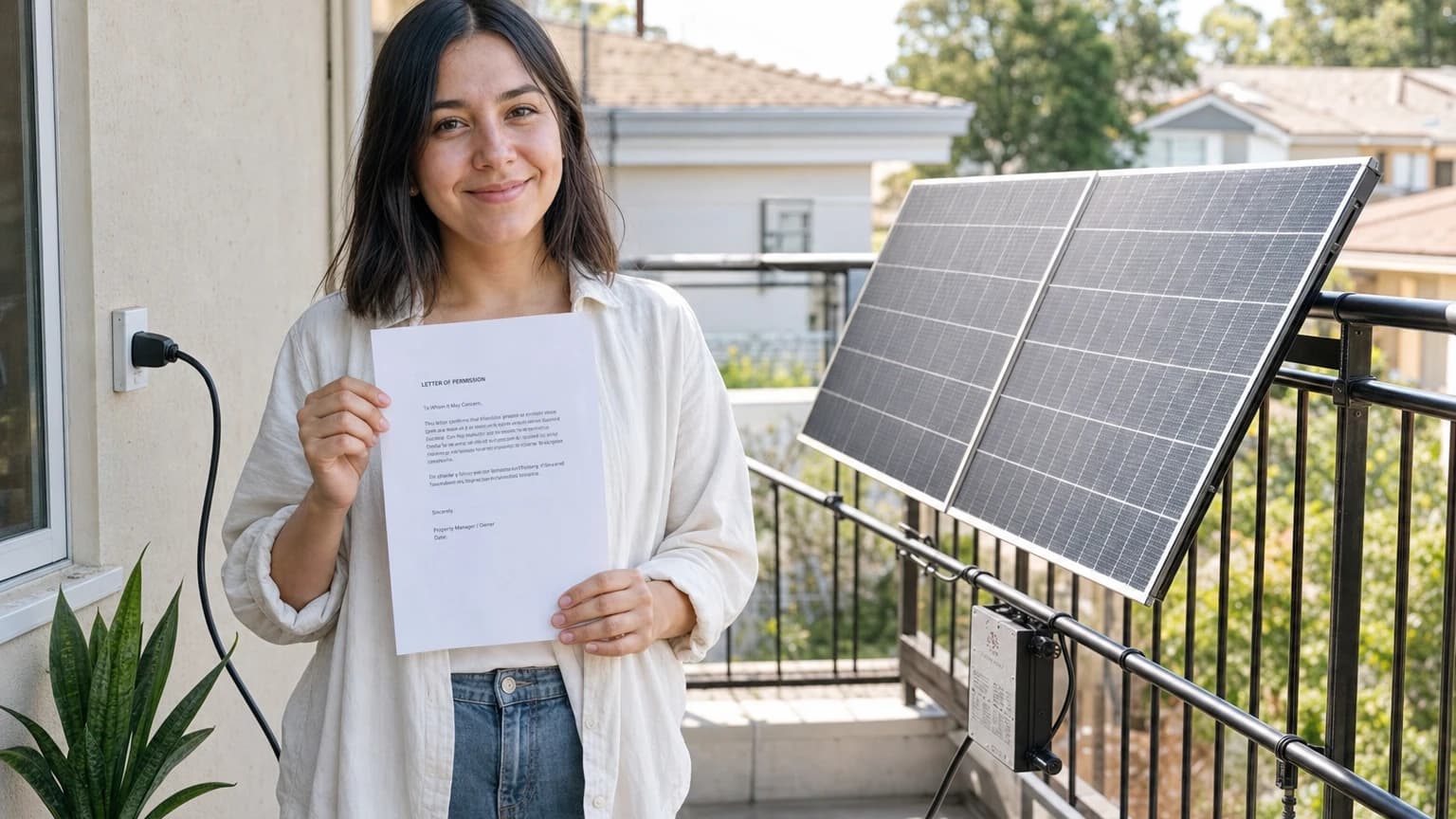
Your landlord is the gatekeeper to your plug-in solar (also called balcony solar) system. The good news? Most landlords say yes when you ask the right way for this renter-friendly solar setup. The key is understanding what they're actually worried about and showing them you've thought it through. This guide walks you through the entire process: what landlords fear, how to frame your request, state-by-state legal backing, and a fill-in-the-blank request letter you can adapt for your situation.
Why Do Landlords Refuse Plug-in Solar — and What Are They Actually Afraid Of?
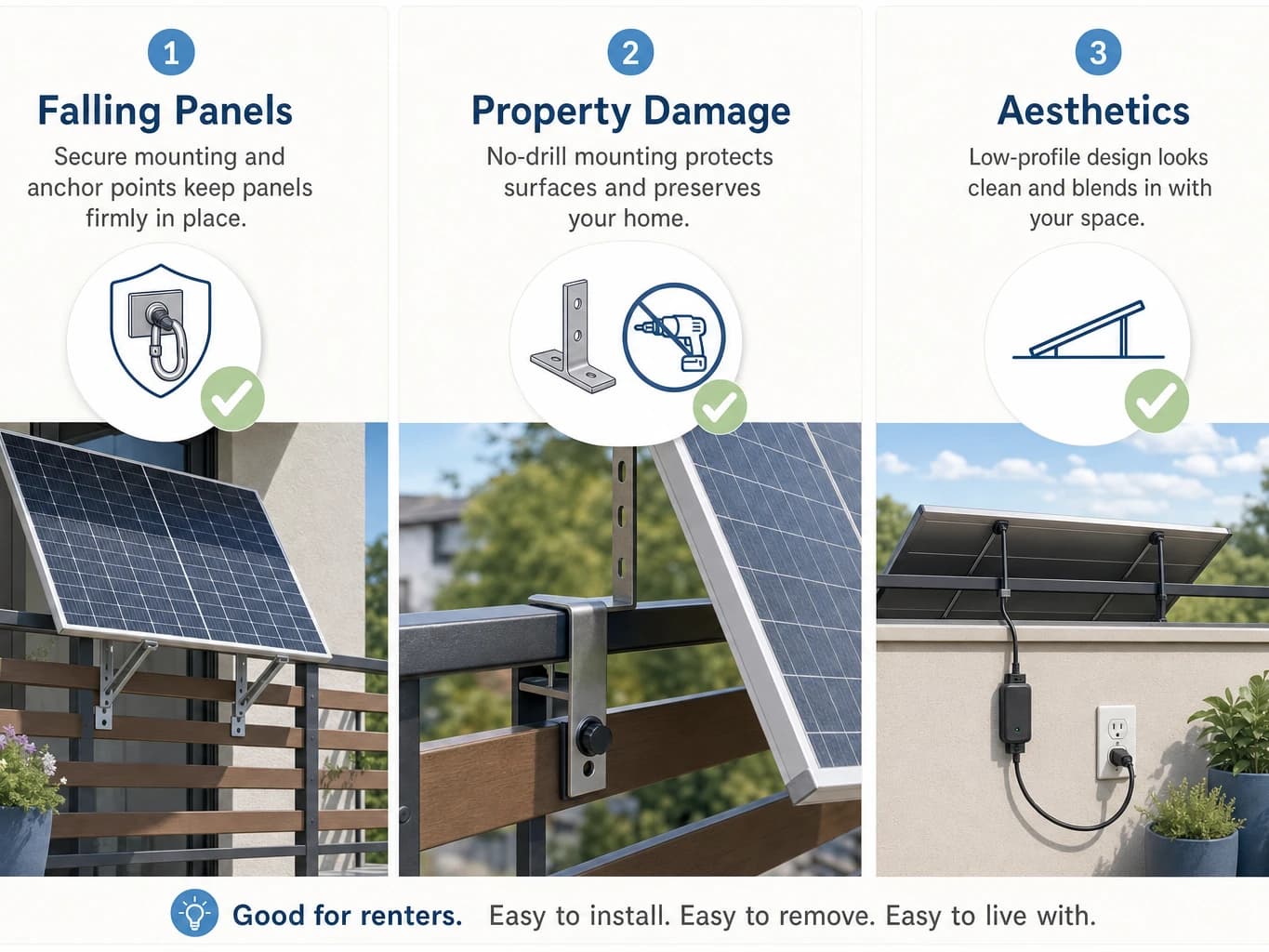
Landlords don't reject balcony solar or solar panels for renters because they dislike clean energy. They reject it because they picture something going wrong: a panel falling, bracket holes in the railing, or neighbor complaints about the view. When you ask, your job is to answer each of those pictures before they come up, with specs and a removal plan, not just reassurances.
Any installation on a balcony, wall, or railing requires your landlord's written permission. Even removable systems do, legally speaking: a landlord has the right to control what's attached to their property. What separates a “yes” from a “no” is understanding what keeps your landlord up at night — and preemptively addressing each concern before they have a chance to raise it.
The three concerns below come up in nearly every landlord conversation about balcony solar. Address all three, and you turn an uncertain “maybe” into a documented “yes.”
Three Landlord Concerns — and How to Address Each One
Concern 1: Something Falls and Causes Damage or Injury
"Wind will knock the panel off. It'll hit someone. I'll be liable."
How to address it: Non-penetrating railing brackets are engineered for wind load — not improvised setups. A typical 400–800W system weighs 30–50 pounds and mounts to the railing itself, not to the building structure. Railing brackets are rated for 50–100 pounds, well within the 200-pound horizontal load your balcony railing is designed to resist (per standard residential building codes).
Key detail: Look up your specific bracket's wind resistance spec and include the number in your letter. "Rated for sustained winds of 65 mph" lands differently than "it's safe" in any landlord's mind.
Concern 2: Installation Damage (Drilling, Punctures, Weathering)
"The bracket will drill holes. Water will get in. Paint will chip. It'll cost me to fix."
How to address it: Non-penetrating brackets clamp onto the railing with no drilling, no holes, and no damage to the building structure. When you leave, you remove the entire system and restore the railing to its original condition — and you can document it with before-and-after photos.
Key detail: Put it in writing: at the end of your tenancy, you'll remove the system, inspect the railing for any marks, and touch up any minor cosmetic damage at your cost.
Concern 3: Building Aesthetics and Neighbor Complaints
"This looks messy. Other tenants will complain. The building will look like a patchwork of DIY solar junk."
How to address it: Acknowledge it directly and offer a boundary: you'll keep the system confined to your balcony only, using a professional-grade kit. Show a photo of the actual system. If they have aesthetic concerns about placement, you're happy to discuss where on your balcony would work best.
Key detail: Landlords who are consulted on where things go tend to say yes. Landlords who are presented with a done deal tend to say no — and usually it's not the panel they're objecting to, it's the feeling of losing control of their property.
For more on electrical safety certifications that reassure landlords, see Is Plug-in Solar Safe?
How to Ask Your Landlord: A Step-by-Step Guide
Ask for balcony solar permission in four steps: start with an informal conversation to gauge openness, gather your system's specs and certifications in writing, submit a formal permission letter addressing your landlord's specific safety and aesthetic concerns, then follow up within one week if you haven't heard back. Written documentation protects both parties.
Step 1: Start Informally (Before the Written Request)
If you have a good relationship with your landlord, begin with a casual conversation. Email works fine, but a phone call or in-person chat is even better — it shows you're not trying to sneak anything past them. Frame it as a question, not an announcement: "Hi [name], I've been looking into balcony solar panels to offset some of my electricity costs. Before I do anything, I wanted to ask if this is something you'd be open to discussing." This gives them a chance to voice concerns early.
Step 2: Do Your Homework
Gather the specific information your landlord will ask for: exact system model and weight, bracket type and weight capacity, panel dimensions, microinverter safety certifications (UL 3700 if available, UL 1741 minimum), installation timeline (typically 1–2 hours), removal timeline (2–4 hours at end of lease), and whether your renter's insurance covers the system.
Browse plug-in solar kits with specs and certifications →Want to see what installation morning actually looks like before you bring it up? See our DIY installation guide →
Step 3: Submit the Permission Letter
After the initial conversation, put your request in writing. This creates a record, and for landlords who consult a property manager or attorney before deciding, written details matter. Use the template below, but personalize it to your landlord's specific concerns.
Step 4: Follow Up
If your landlord doesn't respond within one week, send a polite follow-up email. If they still don't respond after two weeks, ask for a meeting. Sometimes landlords are just busy. Get the final approval in writing before you install anything.
Before finalizing your letter, confirm your microinverter is UL 3700 or UL 1741 certified — landlords respond better to certifications they can look up.
The Renter Solar Request Letter: Template and Talking Points
Below is a template you can adapt. Customize the brackets, wattage, and removal language to match your actual system. A personalized dollar figure makes your case stronger than a ballpark range — calculate your monthly savings using your zip code before writing the letter.
[Your Name] · [Unit Number] · [Date]
[Landlord Name] · [Building Address]
Dear [Landlord Name],
I'm writing to request permission to install a plug-in solar panel system on my balcony at [Unit Number]. I've researched this carefully and want to address any concerns you may have.
The System:
- Product: [System name, e.g., Craftstrom Duo 800W Kit]
- Wattage: 800 watts (produces ~100 kWh/month on average)
- Weight: ~45 pounds
- Dimensions: 77" L × 39" W × 2.4" D
- Mounting method: Non-penetrating railing bracket (no drilling, no permanent attachment)
Safety & Certification:
- The microinverter is UL 1741 certified (UL 3700 for newer systems)
- The bracket is rated for 100+ pounds and tested for wind loads up to [X mph]
- The system includes anti-islanding protection — it automatically shuts off if the grid goes down
- Installation takes 1–2 hours and requires no building modifications
My Commitment:
- I will only use the equipment specified in this letter
- I will maintain liability insurance that covers the system
- When I move, I will remove the entire system and restore your property to its original condition within [2–4] hours
- I will remove any dirt or marks left by the bracket
- I will keep the system confined to my balcony
- I will notify [utility company] of the system as required by [state name] law
This system will save me approximately $20–40 per month on my electricity bill at the national average of $0.17/kWh (U.S. EIA, 2025), which helps me stay a reliable tenant. I've attached the product specifications, bracket engineering documentation, and a photo mockup showing where the system will sit on my balcony.
Thank you for considering this request.
Sincerely,
[Your Name]
Attachments: Product specs, bracket load ratings, photo mockup
Customization tips:
- Replace [brackets] with your actual product model and specs
- Find your bracket's wind load rating in the product manual and include it
- Take a photo of your balcony and mockup where the panels would sit — most landlords green-light it after seeing a professional photo
- Virginia, Colorado, Maryland, and Maine require utility notification; include this detail if applicable (see our permit guide)
What Are Your Legal Rights as a Renter Who Wants Plug-in Solar?
In some states, like Utah, Maine, Virginia, Colorado, and Maryland, laws explicitly protect your right to install plug-in solar (balcony solar) as a renter. Landlords in these states cannot prohibit it outright, though they can set reasonable restrictions on size and placement. In the other states, your landlord controls the decision entirely. Check your state's current status →
States Where Plug-In Solar Law Is Enacted or Signed Into Law
How to use this table:The statuses show whether the statewide framework is already in force (Legal) or enacted but waiting on an effective date (Bill Passed). Click a row or “View” to read that state's full summary, wattage caps, renter-facing rules (where applicable), and other bill details and regulatory nuances.
Renter tenant-protection laws (Virginia, Colorado, Maryland, Utah, Maine, etc.) overlap with this list for some states, but not every “Legal” row is purely about rentals. Always read your state's detail page for the policy specifics you need for your landlord conversation.
Renter-facing protections vary even among the states above: Utah, Colorado, and Virginia include explicit renter protections; Maine's law includes only limited tenant protections; and New York's SUNNY Act does not include landlord protections at all, so renters there still need written landlord permission regardless of the law's status.
What If Your Landlord Says No? Next Steps and Escalation
A first “no” on plug-in solar is rarely permanent. Nearly every landlord objection comes from unquantified risk, not a principled stance against renewable energy. Once the actual concern is named, the conversation usually moves forward.
Step 1: Ask Why
Before accepting "no," ask specifically what concerns them. Is it the electrical connection, potential bracket damage, or how it looks from outside? Once you know the actual reason, you can usually address it. Many initial refusals shift once a landlord understands the difference between a certified system and a DIY electrical modification.
Step 2: Propose a Compromise
If your landlord rejects the railing mount, propose ground-level placement on your patio. If they worry about aesthetics, propose a specific location that's less visible. Sometimes a small modification turns rejection into approval.
Step 3: Offer a Written Agreement
Even hesitant landlords often come around once they see the terms in writing. What landlords fear is the undefined: what happens if the panel falls, or if you leave without removing it? The template in this guide preemptively answers those questions with named terms — product, weight, removal timeline, insurance. When the unknowns are named, the risk becomes manageable.
Step 4: Check Your State Laws
If you live in Virginia, Colorado, Maryland, Utah, or Maine, your landlord may legally owe you permission (with reasonable restrictions). If they refuse without a legitimate safety reason, contact your state's tenant rights board or a tenant advocacy organization. Renter's unions and legal aid societies often have templates and mediation services.
Step 5: Accept and Plan Forward
If your landlord genuinely refuses and you don't have state legal backing, you have to respect that decision. Document it, though: if you move to a state with legal protections or if the law changes, you'll have evidence of what you asked for.
Still a firm “no” after all that? Community solar can be a fallback that doesn't require your landlord's permission at all — you subscribe to a shared off-site solar array instead of installing anything on your balcony.
Sample Lease Amendment Language
If your landlord says yes, get it in writing with a simple lease amendment. Both you and your landlord should sign and initial this document. Keep a copy.
LEASE AMENDMENT: PLUG-IN SOLAR INSTALLATION
Effective [date], Tenant is permitted to install a plug-in solar panel system at [Unit Number], subject to the following terms:
1. System Description
A single plug-in solar kit ("System") with a maximum of [wattage] output, to be mounted on [location: balcony railing / patio ground / wall].
2. Installation & Removal
Tenant will install the System using only non-penetrating, removable brackets. Tenant will remove the entire System within [2–4] hours of lease termination and restore the installation area to its original condition, including touch-up of any cosmetic marks.
3. Maintenance
Tenant is solely responsible for maintenance, repair, and insurance of the System. Tenant will maintain the System in good working order and keep it visually neat.
4. Safety & Inspection
Landlord reserves the right to inspect the System upon reasonable notice. Tenant will provide documentation of UL certification (UL 3700 or UL 1741 minimum) upon request.
5. Liability
Tenant assumes all liability for the System and will maintain renter's insurance that covers the installation. Tenant will provide proof of insurance upon request.
6. Removal of Changes
Upon lease termination, Tenant will remove the entire System and any traces of its installation, restoring the area to original condition. Reasonable wear and tear excepted.
This amendment does not supersede or modify any other lease terms.
Ready to find a system?
Get the specs you'll need for your letter, or estimate your monthly savings first. A personalized dollar figure makes your case stronger.
Frequently Asked Questions
Common questions about getting landlord permission for plug-in solar.
Know your rights. Find the right system.
Laws protecting renters' right to install balcony solar are changing fast. Check your state's current rules, then find a system that will pass your landlord's safety review.
Last updated: April 27, 2026. Laws protecting renters' right to install plug-in solar are changing fast. See your state's current laws →