Will Plug-in Solar Overload My Apartment's Electrical Wiring?
Plug-in solar typically won't overload your apartment's wiring. A 400W–800W system draws only 3–6 amps of current, well within the 15-amp limit of a standard household circuit. The real concern is direction: your apartment's wiring was designed for electricity flowing one way, from the utility to your outlets. A microinverter sends power backward into that same circuit, and traditional breakers can't detect that reverse flow. Here's what that means for your wiring, and the three checks that tell you whether your apartment is ready.
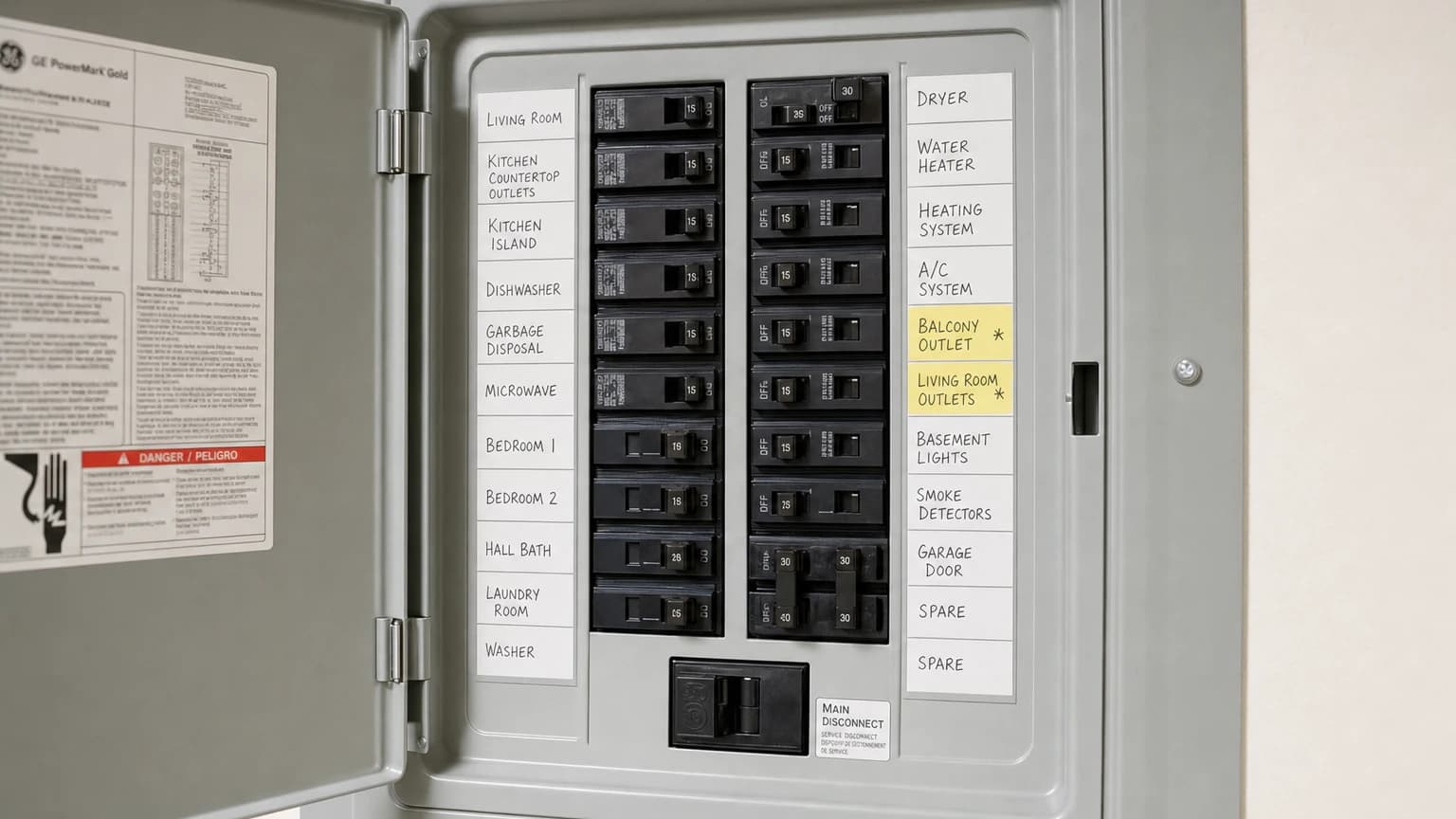
Will Plug-in Solar Overload My Wiring?
Almost certainly not. A certified 400W–800W plug-in solar system draws 3–7 amps — far below the 15-amp limit on a standard circuit. The real risk isn't overload; it's breaker masking: traditional breakers can't detect reverse current from your microinverter. Certified equipment under UL 3700 or UL 1741 SB eliminates this hazard entirely.
How Much Current Does Your System Actually Draw?
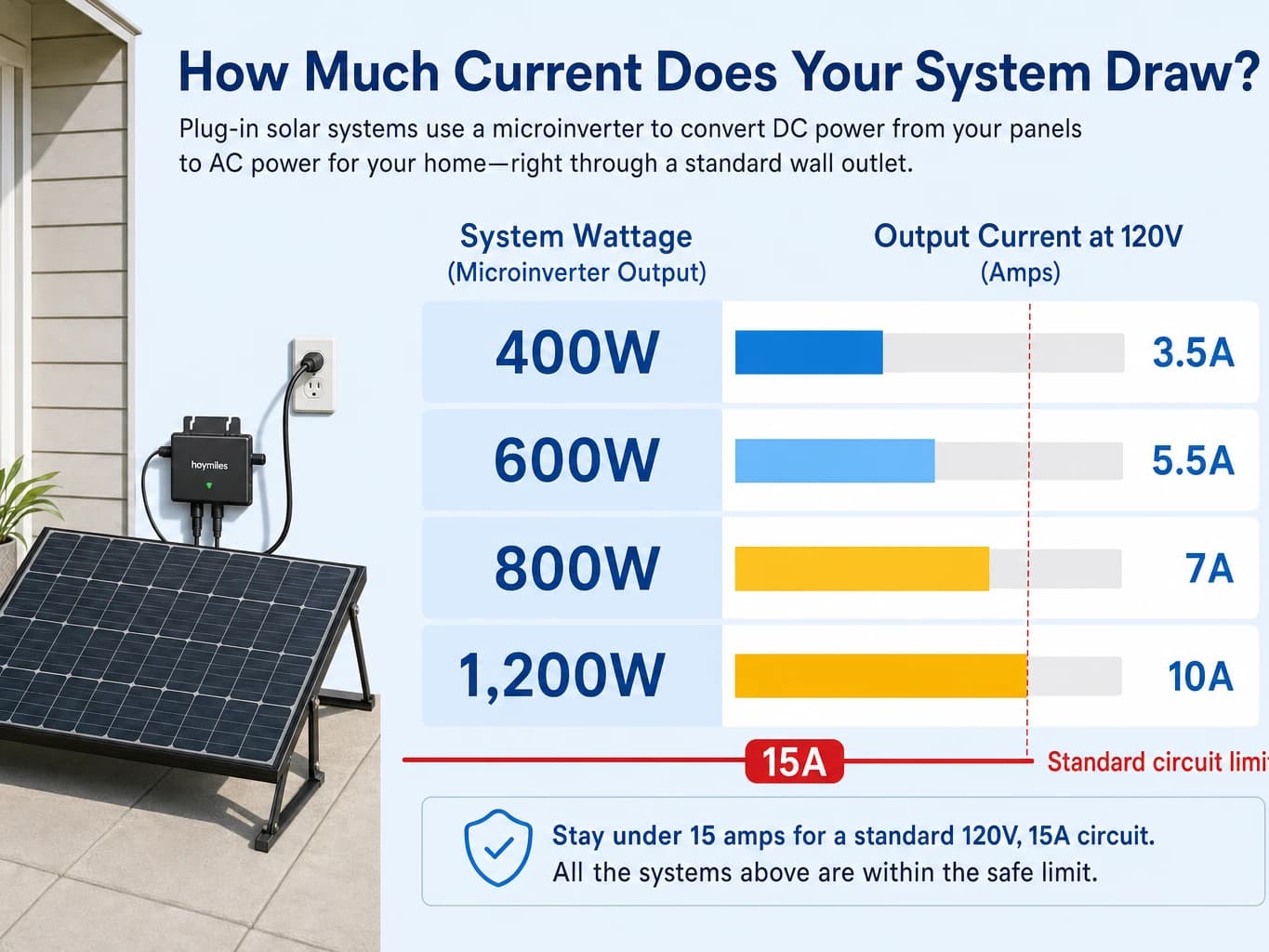
Panel wattage is misleading: a 600W solar panel doesn't mean 6 amps of current flowing through your outlet. The microinverter converts DC power from the panel into AC power for your home, and that conversion determines the actual current your circuit sees.
A 600W microinverter outputs roughly 5.5 amps at 120V (calculated as power divided by voltage). An 800W system outputs about 7 amps. A 400W starter system runs around 3.5 amps. Compare that to a standard 15-amp circuit breaker, and you've got plenty of safety margin. Not sure what actually comes in the box? See what's included in a plug-in solar kit.
Here's where renters get nervous: your apartment wiring was designed to send electricity in one direction — from the utility to your outlets. When a microinverter sends power backward into that outlet, traditional circuit breakers don't “see” that reverse flow. This is called breaker masking. Certified microinverters eliminate this risk, and UL 3700 (effective January 2026) adds a dead-prong safety layer on top.
How Much Wiring Capacity Does Your Apartment Have?
A standard 15-amp household circuit in an apartment is rated for 1,800 watts of continuous load at 120V. But your kitchen outlet may already power a microwave and coffee maker, and your living room outlet may run a TV and lamp. You need to know how much load is already on the specific circuit where you'll plug in your system.
If your outlet is on a shared kitchen circuit already pulling 8 amps, adding a 6-amp microinverter brings the total to 14 amps — acceptable but close to the limit. A lightly loaded bedroom or living room outlet pulling 2–3 amps is a better choice: a 600W–800W system gives you 5–10 amps total, which is genuinely safe.
The key formula
Existing circuit load + microinverter output ≤ 15 amps. Use our savings calculator to size your system first, then apply this formula to your specific outlet. If the sum hits 16 amps or higher, move to a different circuit.
Many apartment renters skip this step and just plug in. Nothing might go wrong for years. But you're the one living with the risk, so a $150–$350 electrician consultation is worth it if you're uncertain.
The Breaker Masking Problem (and How UL 3700 Fixes It)
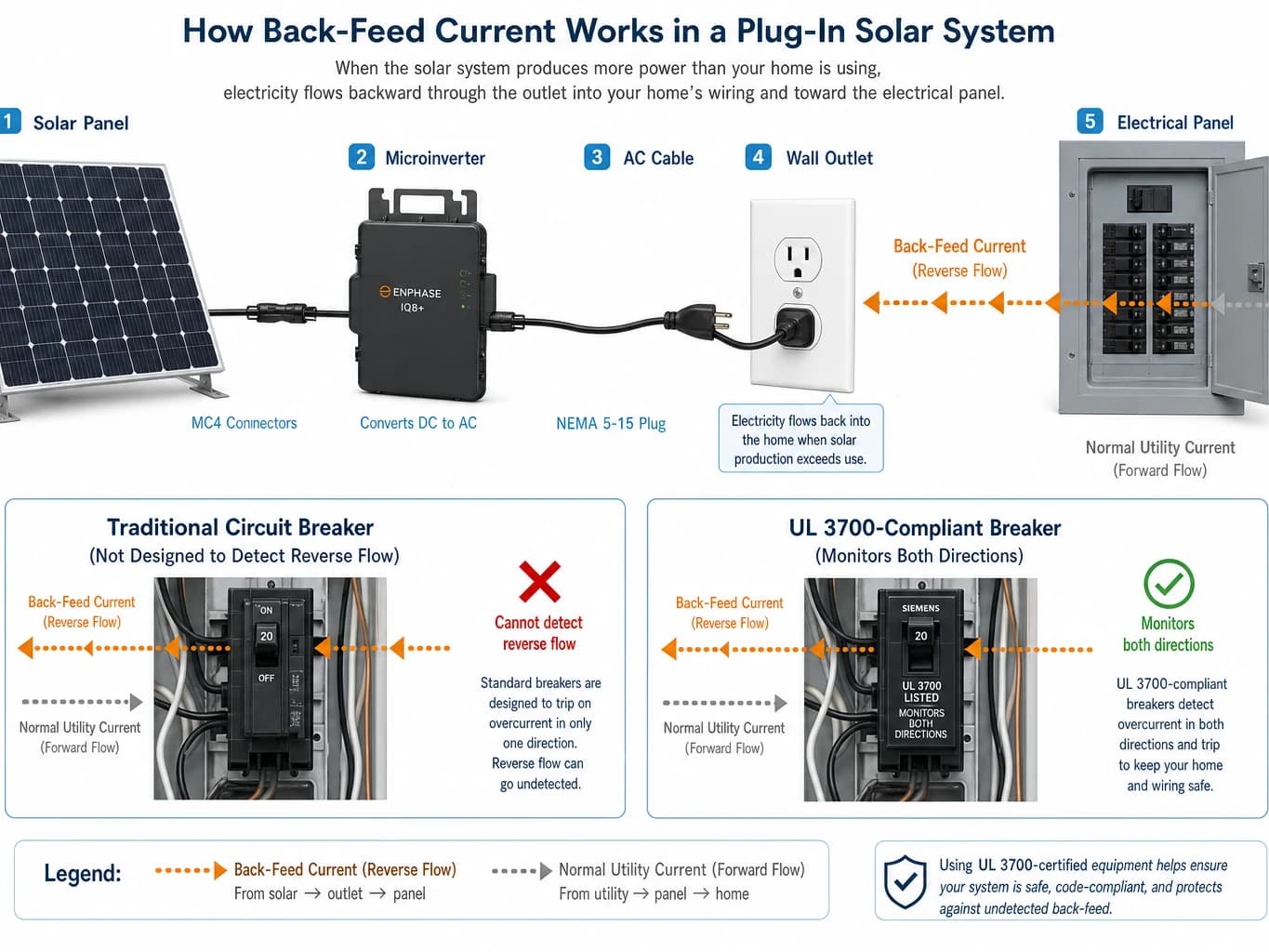
Standard residential circuit breakers trip when forward current (utility power flowing to your appliances) exceeds 15 amps. They have no mechanism to sense reverse current (solar power flowing backward). So if a bug in your microinverter's software caused it to dump 20 amps back into your circuit, the breaker wouldn't trip — the wires could overheat while the breaker sat silent.
This is breaker masking. It's a real hazard with non-certified DIY solar installations. That's why certification matters.
How UL 3700 Eliminates Breaker Masking
Breaker masking was central to the 2026 legislative fight over plug-in solar too — Washington's utilities cited exactly this risk when the state Senate stripped plug-in solar provisions from HB 2296 in early 2026.
The first UL 3700-certified microinverter reached the market in July 2026, when APsystems certified its EZ1-LV. If you're shopping today, Enphase microinverters are certified to UL 1741 SB, which requires anti-islanding and other protections. The bottom line: certification matters more than wattage.
Real-World Scenarios: Is Your Apartment Safe?
Where your building falls on the wiring timeline determines how much caution you need.
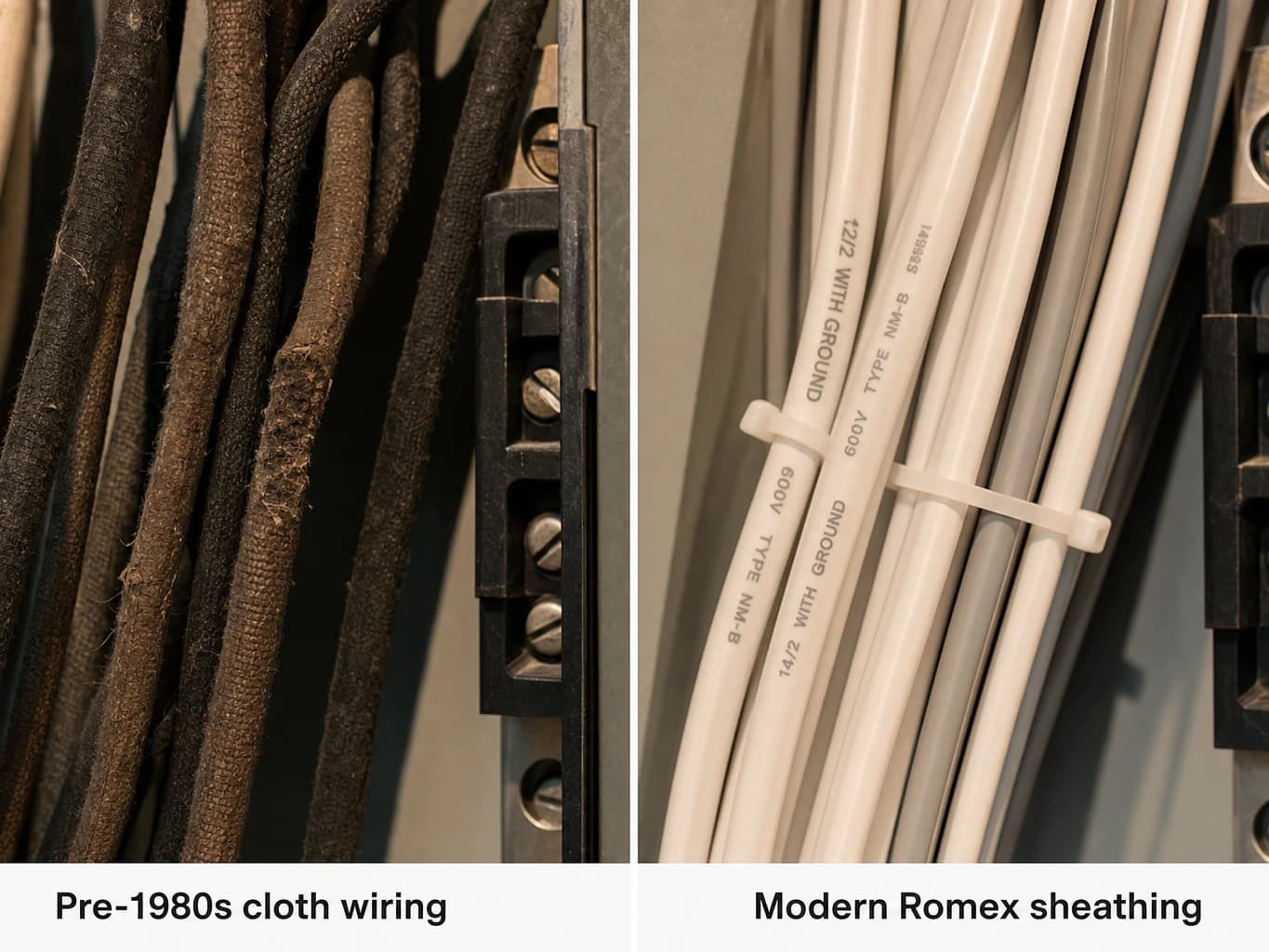
Pre-1980s Building
Old Cloth Wiring
Cloth insulation degrades with age and heat. If you see wires wrapped in cloth in your panel, stop and get an electrician before installing anything. A $150–$350 inspection is far less than the cost of a wiring failure.
2000s Apartment
Standard Romex, 100-Amp Panel
Modern Romex wiring and labeled circuit breakers are safe for a 600W–800W system on a dedicated bedroom or living room circuit. Check the kitchen breaker load first — it's often shared with heavy appliances.
New Construction (2023+)
Modern Panel, Dedicated Circuits
You're in the clear. Top-grade wiring and clear circuit assignments mean a 600W–1200W system is safe. Even a 1,200W microinverter's 9-amp max plus normal living room load barely reaches 12 amps.
Pre-Installation Electrical Checklist for Renters
Walk through this before you buy. If you can't answer “yes” to most of these, schedule an electrician visit first.
If you're uncertain about any of these, hire an electrician. A $150–$350 inspection answers all six questions and gives you legal liability protection if something goes wrong later.
When Do You Actually Need an Electrician?
Most apartment renters don't hire an electrician for plug-in solar. They just plug in and hope. Some get lucky. Wondering if you need an electrician at all? See our full DIY installation guide. Otherwise, you should hire one if:
- Your apartment was built before 1980
- You can't identify which circuit your outlet is on
- You see signs of old cloth wiring or corroded breakers
- You're unsure whether your state or utility permits back-feed
- Your landlord requires documentation before approving installation
- You want written confirmation that your outlet is safe
What to ask the electrician:
- 1.Can this circuit safely handle a 6-amp back-feed from a microinverter?
- 2.What's the oldest wiring in this circuit, and is it in good condition?
- 3.Does my lease or the building rules restrict solar installation?
- 4.If I run a power cable from my balcony to this outlet, does it meet NEC code?
Cost: $150–$350 for a consultation and inspection. Most offer this as a flat rate.
Red flag: Beware of over-billing
If your electrician says you need a dedicated circuit installed for solar, they aren't familiar with plug-in solar. Plug-in systems are designed to work on existing outlets. Certified microinverters don't require panel upgrades or new circuits. Get a second opinion.
Special Cases
Can I use a GFCI outlet?
Yes. GFCI outlets work fine with plug-in solar. UL 3700 explicitly covers GFCI compatibility. Your microinverter won't trip the GFCI during normal operation.
Can I run two plug-in solar systems on the same circuit?
No. Two microinverters on one circuit doubles the current. Each system needs its own dedicated circuit, or they need to be on separate branch circuits with enough capacity.
What if my building doesn't allow modifications?
Check your lease and building rules. Some apartments explicitly forbid power modifications; others allow outlet-level devices. If your lease says no, get written permission from your landlord, or consider a portable power station as an alternative.
Frequently Asked Questions
Common questions about plug-in solar and apartment electrical safety.
Ready to size your system and check your savings?
Enter your zip code and monthly electricity bill. Our calculator uses real solar data for your location to estimate how much a 400W–800W system would save you.
Last updated: May 8, 2026. Information on this page is reviewed quarterly for accuracy.