Plug-In Solar vs. Portable Solar Generator: What's the Difference?
If you're staring at a high electric bill or wondering what will keep the fridge running during an outage, these products can look similar at first. A plug-in solar system — also marketed as balcony solar or plug-and-play solar — quietly trims your electric bill every single day you leave it plugged in. A portable solar generator stores power you can take anywhere. An 800W plug-in solar kit can often shave roughly $14-$21 off a monthly bill at typical US electricity rates, while a similarly priced power station buys you outage backup instead of savings.
We may earn a commission when you purchase through product links. It doesn't affect the price you pay. See our full disclosure →
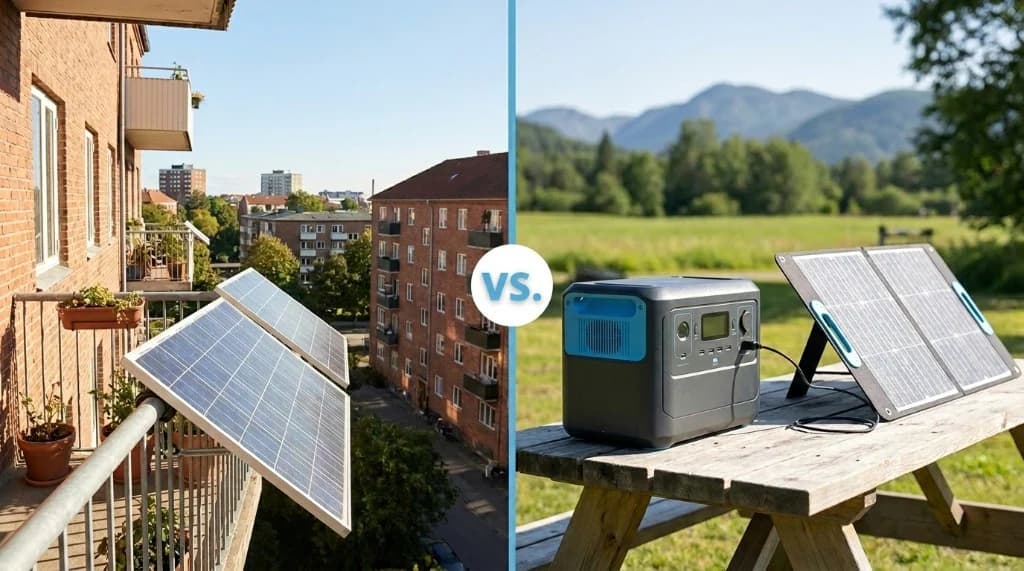
What's the Core Difference Between Plug-In Solar and a Portable Solar Generator?
Plug-in solar connects to your home's electrical grid through a standard outlet and automatically reduces how much electricity you draw from your utility. A portable solar generator is a self-contained battery you charge with solar panels and use to power devices directly, with no connection to your home's electrical system.
Plug-in solar is about offsetting utility power in real time. A portable solar generator is about storing electricity so you can use it later, whether that's at a campsite, on a job site, or during an outage.
That distinction matters because the same solar panel can feed either system, but the result is completely different. One lowers what you buy from the grid. The other gives you stored power when the grid isn't available or isn't convenient.
How Does Plug-In Solar Work?
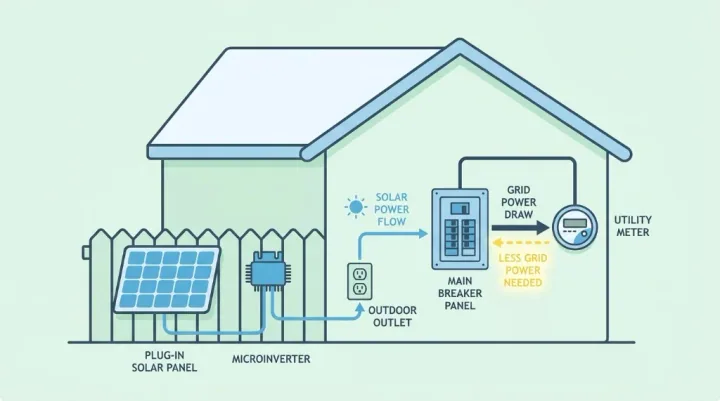
A plug-in solar panel kit includes a solar panel, a small device called amicroinverter, and a cable that plugs into a regular outdoor outlet. The microinverter converts the DC electricity your panel produces into AC electricity that matches your home's grid, the same type of power that comes out of your wall.
When your panel is generating power, that electricity flows into your home's wiring and gets used by whatever is running right now. Your refrigerator, your TV, your HVAC system all pull from your panel's output first, before drawing from the utility grid. Your electric meter spins more slowly (or sometimes backward, depending on your utility). At the end of the month, you owe less.
This happens automatically, with no batteries and no daily routine. You plug in a certified system, put the panel in the sun, and monitor its output over time.
What about safety?
Every grid-tie microinverter sold for plug-in solar in the US must includeanti-islanding protection. If the grid goes down, your system shuts off within seconds, so it won't back-feed power into utility lines while workers are trying to fix them. This is a non-negotiable safety standard under NEC 705 and the UL 3700 framework published in December 2025. For the full breakdown of what these certifications actually prevent, see our plug-in solar safety guide.
One thing plug-in solar cannot do: power your home during an outage. Because it shuts off when the grid goes down (by design), it won't keep your lights on when the power fails. If backup power is your goal, a portable power station is the better tool. If you want the full outlet-safety breakdown, read our guide to plugging a solar panel into a wall outlet.
How Does a Portable Solar Generator Work?
A portable solar generator (sometimes called a portable power station) is a rechargeable battery pack with an inverter built in. You charge the battery from the sun using foldable solar panels, from a wall outlet, or from a car's 12V port. Then you unplug devices from the wall and plug them directly into the power station.
Compare a power station by its usable battery capacity, output rating, charging inputs, and warranty. Those details tell you more about practical runtime than a marketing bundle name.
These devices don't connect to your home's electrical system, so they do not reduce your electricity bill and your meter keeps spinning normally. What they give you is stored energy you can use anywhere without access to the grid: a campsite, a job site, or your living room when the power is out.
One useful distinction: a "portable solar generator" is technically a portable power station that comes bundled with solar panels. A power station sold alone is still the same battery-based off-grid product; the difference is whether panels are included in the box.
The Key Tradeoff: Passive Savings vs. On-Demand Power
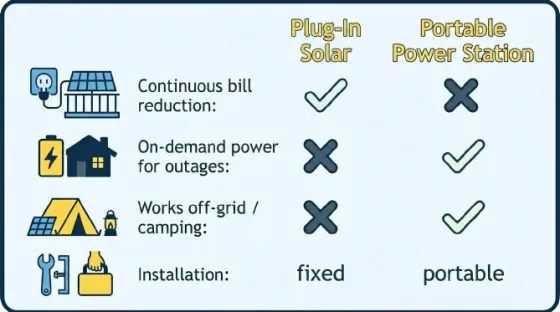
An 800W plug-in solar kit can often save about $14-$21 per month at typical US electricity rates. A similarly priced portable power station gives you backup runtime and portability instead. Same sunlight, different payoff.
| Plug-In Solar (Grid-Tie) | Portable Solar Generator | |
|---|---|---|
| How it saves you money | Reduces grid draw automatically | Doesn't reduce your electric bill |
| Works during a power outage | No — shuts off for safety | Yes |
| Needs user operation | No — plug it in, leave it | Battery must be charged; devices re-plugged to it |
| Portable | No — stays mounted outdoors | Yes — designed to move with you |
| Payback period | Typically 3–7 years. See our full payback analysis | No payback — it's a convenience product |
| Legal requirements | Varies by state | None |
The payback calculation is the clearest dividing line. A standard 800W plug-in solar system costs $400–$1,200 depending on brand and configuration. At the national average electricity rate of about $0.17/kWh in 2025 and just over $0.18/kWh in the EIA's January 2026 Short-Term Energy Outlook, an 800W system typically generates 80-120 kWh per month and saves you $14-$21 per month. That's a payback period of roughly 2-6 years, after which the savings are pure profit.
A portable power station doesn't pay you back. It stores grid electricity (or solar electricity) and lets you use it somewhere else. That's useful, but it's not a savings tool.
Which One Is Right for You?
Most people come to this question for one of two reasons: they want a lower electric bill, or they want power when the grid goes down. Those are different problems, and the right product depends on which one you're actually trying to solve.
You want to lower your electric bill
Plug-in solar is the right tool. You mount one or two mini solar panels on your balcony, patio, or yard — this plug-and-play solar approach is ideal for renters and apartment dwellers — plug the cable into an outdoor outlet, and the system starts reducing your electricity draw immediately.
A 400W starter system (two small panels, one microinverter) works well as solar panels for renters with a south-facing balcony. An 800W standard system suits most apartments and condos with decent sun exposure. The math works best if you stay in one place for at least a few years, because that's when the payback period actually pays out.
Before going this route, check whether your state allows plug-in solar. As of August 1, 2026, 5 states have an enacted framework, 4 have a passed bill awaiting its effective date, and 26 have pending legislation. Utilities can still set their own notification or interconnection requirements.
No usable outdoor space with sun access? Community solar is a no-installation alternative worth a look — see our plug-in solar vs. community solar comparison for renters.
You need power off-grid or during outages
A portable power station is the right tool if your main concern is keeping essentials running when the grid is unavailable. That could mean camping, working on a job site without grid access, or just wanting a backup source for the next storm-related outage.
Check a portable power station's rated watt-hours against the loads you need to run. A refrigerator, CPAP, phone, and laptop have very different runtime needs, so use the manufacturer's current specifications before choosing one.
This is also the simpler fallback if you rent and can't mount panels, or if your state or utility still makes plug-in solar interconnection a hassle. It won't lower your monthly bill, but it does give you stored energy when plug-in solar can't help.
You want both
Some people combine them. A plug-in solar system handles the ongoing bill reduction, and a portable power station sits ready for outages or outdoor trips. They're not substitutes. They solve different problems, and some households want both.
There are also hybrid products worth knowing about. EcoFlow's PowerStream, for example, pairs a portable battery (the EcoFlow DELTA 2) with a microinverter that can feed power back to the grid. It bridges both categories, but comes with added complexity and a higher upfront cost than either option alone.
What Does a Plug-In Solar System Cost?
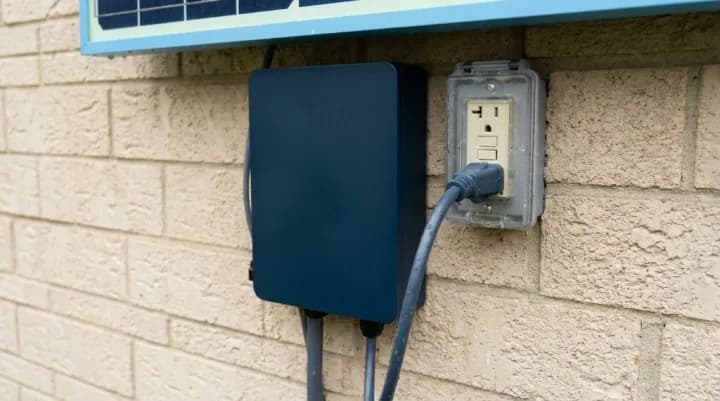
A complete plug-and-play solar kit — one or two panels, a microinverter, mounting hardware, and cables — typically runs between $400 and $1,200.
On the lower end, a basic 400W system combines compatible panels, a certified microinverter, mounting hardware, and cable. Confirm what ships in the box before comparing prices, since mounting and storage can change the total sharply.
At the higher end, 800W systems with more robust mounting hardware and branded kits run $800–$1,200.
Installation is typically a DIY job. Most people can set up a balcony system in a few hours without an electrician — a significant cost difference from rooftop solar, which requires professional installation and permitting and costs $12,000–$25,000 before incentives.
Current plug-in solar options
What Does a Portable Solar Generator Cost?
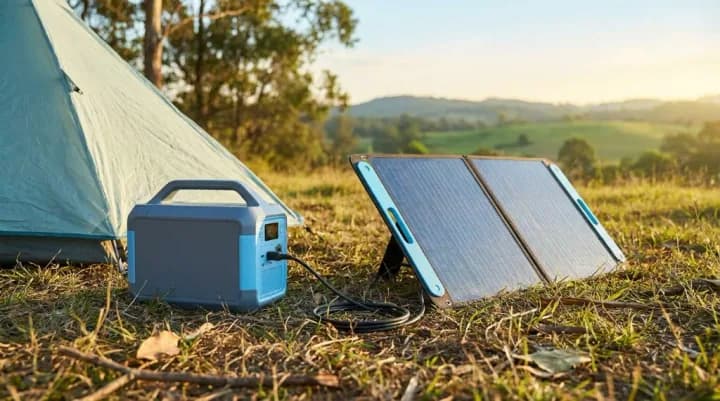
Portable power stations range from $200 for small units (200–300Wh) to $3,000+ for the largest whole-home backup systems.
For most people comparing this to plug-in solar, the relevant range is $400–$1,000. Price changes with battery capacity, output rating, panel bundle, and current promotions:
- ~$400–$5001,000–1,100Wh — Compact power stations. Enough for camping, phones, laptops, and a CPAP.
- ~$700–$9001,500–2,000Wh — Mid-capacity power stations. Handles short home outages and heavier devices.
- $1,500+2,000–4,000Wh+ — Large expandable power stations. Serious backup for extended outages or off-grid living.
Unlike plug-in solar, none of these prices pay themselves back. You're buying convenience and security, not a savings tool.
Frequently Asked Questions
Common questions about plug-in solar and portable solar generators.
Ready to see how much plug-in solar could save you?
Enter your zip code and monthly electricity bill. Our calculator uses real solar data for your location to estimate your savings.
We may earn a commission when you purchase through these links — it doesn't affect the price you pay. See our full disclosure →
Last updated: August 1, 2026. Information on this page is reviewed quarterly for accuracy.