What Is a Microinverter — and Why Does Every Plug-In Solar Kit Need One?
Your solar panel produces electricity, but not the kind your home runs on. The panel generates DC power (direct current). Your home runs on AC power (alternating current). A microinverter is the small device that sits between the two, translates DC into AC, and makes the whole system work.
What Is a Microinverter?
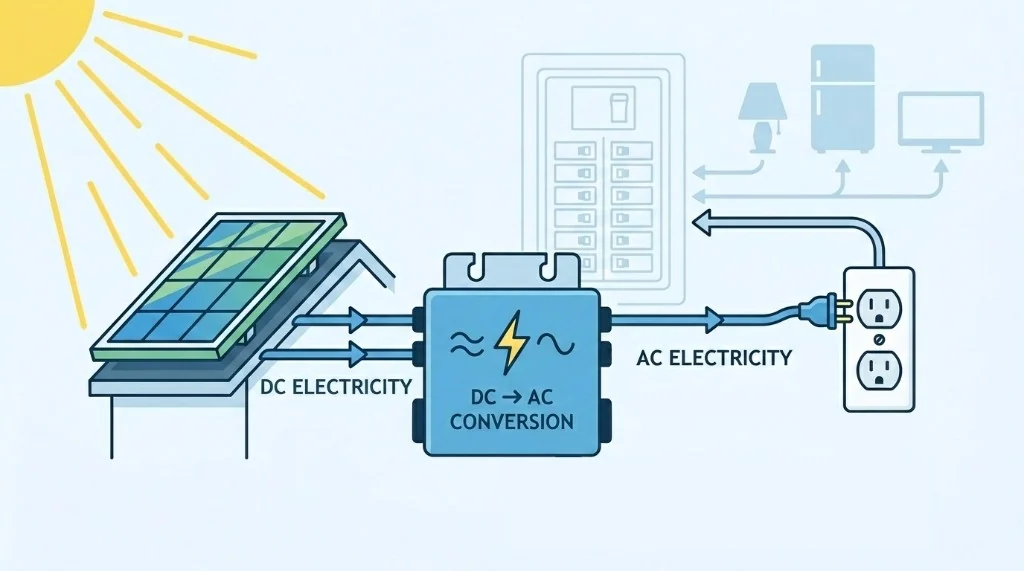
A microinverter is a compact inverter that attaches directly to a single solar panel and converts that panel's DC electricity into the AC electricity your home's outlets and appliances use. In a plug-in solar kit, it also includes the cable that connects to a standard outdoor outlet, which is how your system joins your home's electrical grid.
The key word is "micro." In traditional rooftop solar installations, one large string inverter handles the output of every panel at once. A microinverter does the same job, but for one panel at a time, right at the panel itself. That distinction matters a lot, and we'll get into why.
For plug-in solar kits, the microinverter is what makes the system possible. It converts the power, manages the grid connection, and handles every safety requirement your utility and local code demand. It's the brain of the whole setup.
A certified microinverter is what turns that panel into a legal, grid-connected power source that can chip away at your daytime electric bill. A small 400W setup often saves about $8-15 per month, and an 800W setup can roughly double that in a typical US market. See exactly how long a system takes to pay for itself →
How Does a Microinverter Convert Sunlight Into Electricity You Can Use?
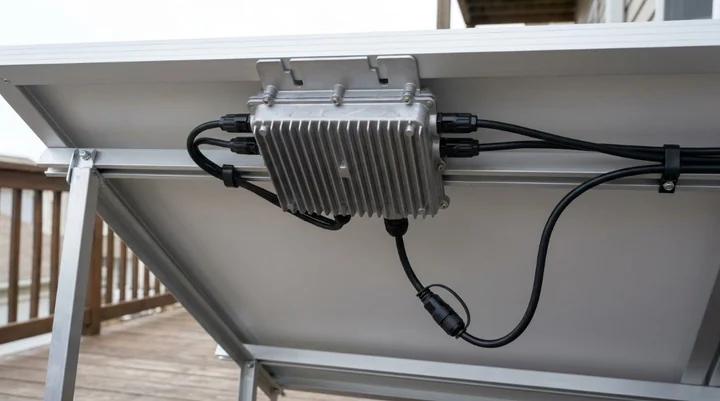
A microinverter converts your panel's DC output into AC in two stages: first it stabilizes the incoming voltage, then it flips the current from DC to AC. The whole process happens continuously, thousands of times per second, at up to 97.3% efficiency in top-tier units like the APsystems EZ1.
Stage 1 — Voltage stabilization (MPPT)
Solar panels don't produce a steady voltage. Output shifts constantly based on sunlight angle, cloud cover, and panel temperature. The microinverter's internal DC-to-DC converter smooths that variable input into a stable level it can work with. This process is called Maximum Power Point Tracking (MPPT). It's also why well-designed microinverters squeeze more energy out of each panel than string inverters do — they track each panel's peak performance independently.
Stage 2 — DC to AC inversion
Once the voltage is stable, the inverter circuit switches the DC on and off at frequencies in the kilohertz range using semiconductor switches. That rapid switching creates a waveform that mimics the 60Hz AC power your home already runs on. A filter at the output cleans the waveform so it's indistinguishable from grid power — and your refrigerator, your TV, your washing machine can use it without knowing it came from a panel on your balcony.
How Does a Microinverter Sync With the Grid?
Before your microinverter sends a single watt into your home's wiring, it reads the grid, specifically its frequency (60Hz in the US), voltage (120V), and phase angle, then adjusts its own output to match exactly. Only when the values align does it begin feeding power into your circuit.
This happens through a process called grid synchronization. The microinverter uses a phase-locked loop (PLL) algorithm to continuously match its output to the grid's parameters. Think of it like merging onto a highway: your car has to match the speed of traffic before it can safely join the flow. The microinverter matches the "speed" of your home's electrical current before it adds any power. These US-specific parameters (120V/60Hz) are also one reason plug-in solar hardware isn't simply imported wholesale from Germany, where the balcony solar format first took off at 230V. See how Germany's balcony solar boom compares →
Once synchronized, the microinverter runs continuously, adjusting in real time as grid conditions shift. When your panel is producing electricity, that power flows into your home's wiring and gets consumed by whatever's running right now, your HVAC, your phone charger, your lights. Your utility meter records only the difference between what you consumed and what your panel generated. That difference is your savings. In states that require it, the same real-time control can also be configured for zero-export solar operation, capping output so none of it ever backfeeds onto the grid.
Want to see what that savings looks like for your specific location? Try our free savings calculator →
What Safety Features Does a Microinverter Have?
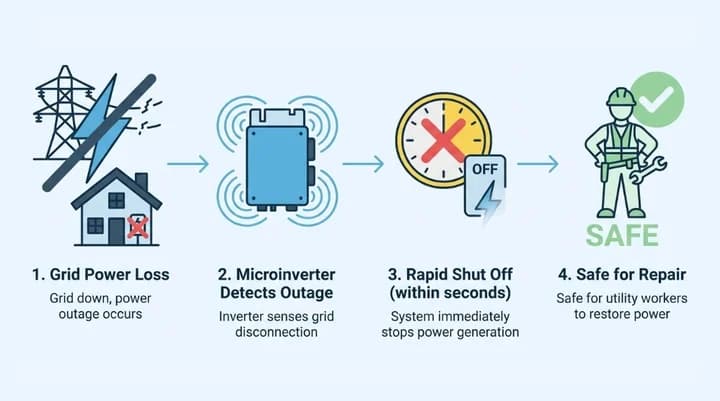
Every certified microinverter for plug-in solar has two built-in safety systems that protect both you and utility workers. Most people don't know these exist, but they're the reason plug-in solar is legal and insurable — and why most systems are straightforward to self-install without an electrician.
Anti-Islanding Protection
When your utility grid goes down after a storm, a plug-in solar system without safety controls would keep producing power and feeding it into the neighborhood's lines. That's dangerous: utility workers arriving to fix the outage would encounter live wires they expect to be dead.
Anti-islanding protection prevents this. Your microinverter continuously monitors grid voltage and frequency. The moment either drifts outside a tight tolerance band, typically ±10% voltage and ±0.5Hz frequency, the microinverter interprets this as a grid failure and shuts off within about 200 milliseconds. Roughly the time it takes to blink.
This is required by IEEE Standard 1547-2018, which governs all distributed energy resources connected to the US grid. Every UL 1741-certified microinverter meets this standard. No certification means no legal grid connection. For the full picture of what makes a system safe to plug in, see our complete plug-in solar safety guide.
Side effect: your plug-in solar won't keep the lights on during an outage. The system shuts off intentionally to protect the grid. If backup power is your goal, here's how plug-in solar and portable power stations compare. A hybrid inverter paired with a battery is another option — see whether you need a battery with plug-in solar.
Dead-Prong (Rapid-De-energize) Safety
Traditional rooftop solar is governed by NEC Section 690.12, which requires rapid shutdown, cutting panel voltage to safe levels within 30 seconds for firefighter access. Plug-in solar handles the same risk differently.
The UL 3700 standard, launched by UL Solutions in December 2025, requires that when you unplug the AC cable from the wall outlet, the metal prongs on the plug become de-energized within one second. There's no window during which touching the prongs could shock you.
This dead-prong feature is what makes plug-in solar safe to unplug and move, something rooftop solar simply can't do. It's also the key reason certified plug-in kits are safer than uncertified "suicide cable" setups that skip this protection entirely. The same current monitoring also helps prevent breaker masking in apartments with older wiring — see whether plug-in solar can overload your circuits.
Read more: Can You Plug Solar Panels Into a Regular Outlet? →
Microinverter vs. String Inverter: What's the Difference?
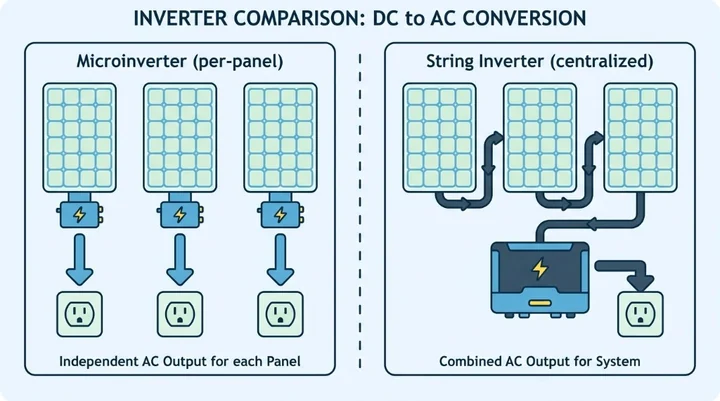
For plug-in solar, you'll always use a microinverter. String inverters don't work for single-panel or small plug-in systems. But understanding why explains the microinverter's real advantages.
| Microinverter | String Inverter | |
|---|---|---|
| Where it lives | Attached to each individual panel | One central unit near your electrical panel |
| Converts power | At each panel, independently | All panels together at once |
| Shading sensitivity | Low — one shaded panel doesn't hurt others | High — one shaded panel drags down the whole system |
| Monitoring | Panel-by-panel data | System-wide total only |
| Failure impact | One panel stops; rest keep working | Whole system goes down |
| Failure rate | ~0.055% | ~0.89% |
| Typical warranty | 12–25 years | 10–12 years |
| Best for | Plug-in solar, shaded sites, complex roofs | Large, simple, unshaded rooftop arrays |
Solar Insure puts microinverter failure rates at about 0.055% per unit, versus 0.89% for string inverters. That is roughly a 16x gap, and it matters more in a small plug-in setup where one failed component can wipe out most of your savings until you replace it.
The shading advantage also matters more for plug-in solar users than most people expect. Balconies, patios, and rental windows often have partial shade at certain times of day. With a string inverter, any shade on one panel degrades the whole system. With a microinverter, each panel performs at its own best.
Which Microinverters Are Certified for Use in the US?
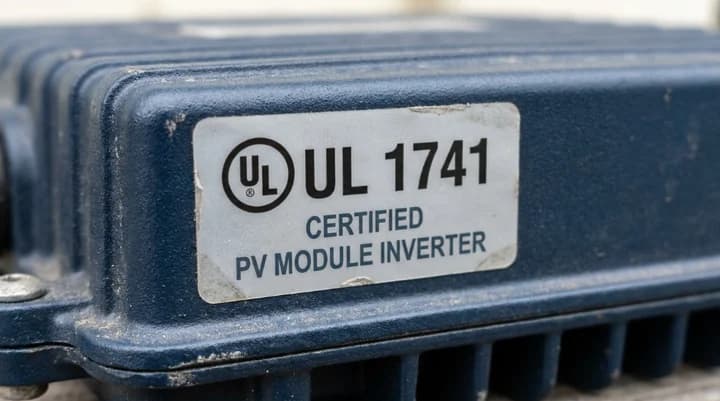
In the US, grid-connected microinverters must carry UL 1741 certification at minimum. This standard verifies that the microinverter meets IEEE 1547-2018 interconnection requirements, including anti-islanding, and passes fire and electrical safety tests.
Look for UL 1741 SB (Supplement B) certification, which adds advanced grid support features required in states like California and Hawaii. The newer UL 3700 standard covers plug-in solar equipment and systems, including the cable and plug. Launched December 2025, it saw its first certified product in July 2026, when APsystems certified its EZ1 microinverter, with more brands expected to follow. Read our full UL 3700 requirements breakdown →
We may earn a commission when you purchase through these links — it doesn't affect the price you pay. See our full disclosure →
APsystems EZ1-LV
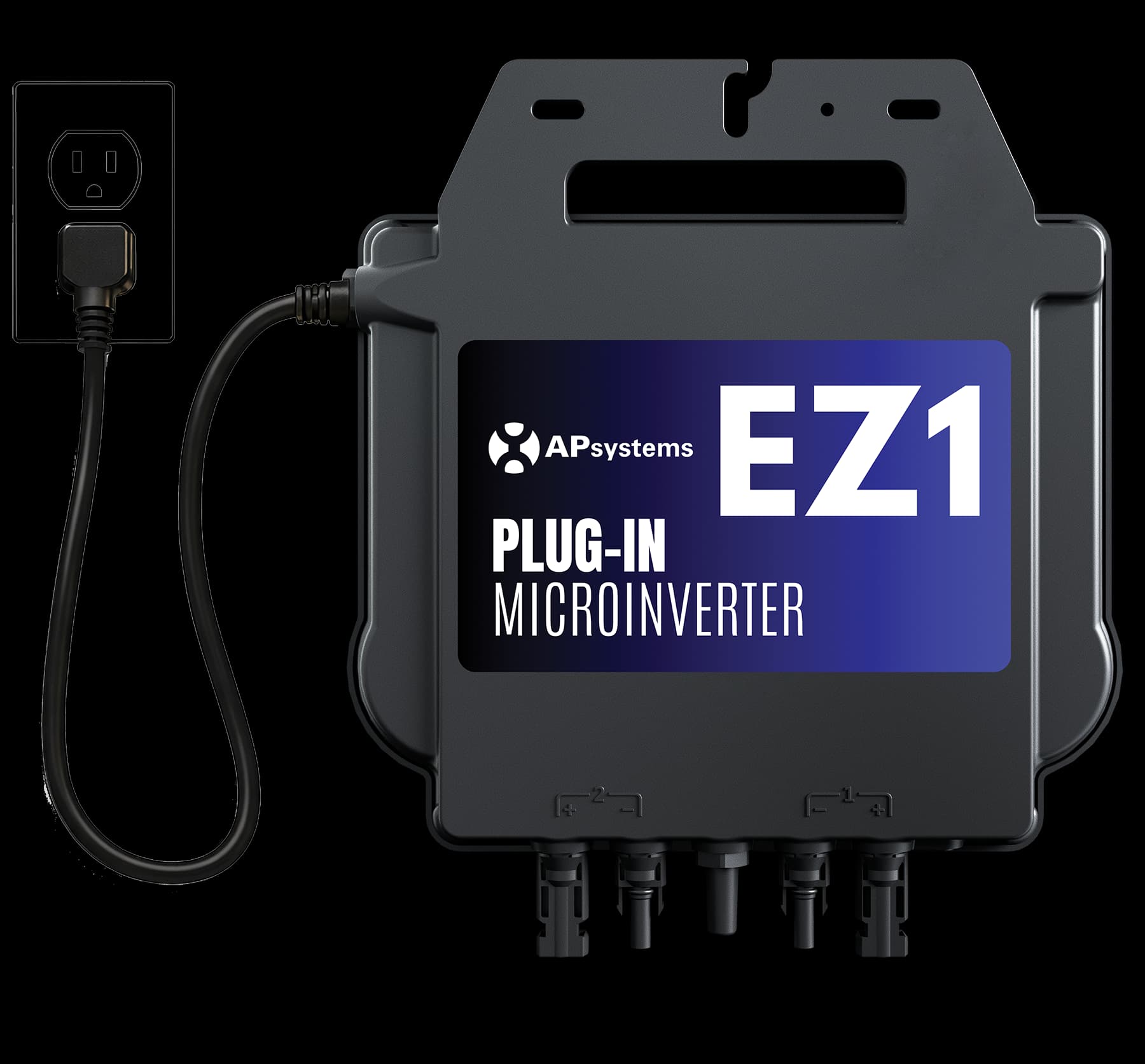
Plug-in & balcony solar specialistThe first microinverter designed specifically for plug-in solar and balcony solar applications in the US — including renter-friendly solar setups. Available direct from APsystems at $325. Dual MPPT inputs (supports two panels), 97.3% peak efficiency, UL 1741 listed. Bluetooth monitoring via the EMA app. 12-year warranty. Opened direct-to-consumer US sales in February 2026.
EcoFlow STREAM Microinverter
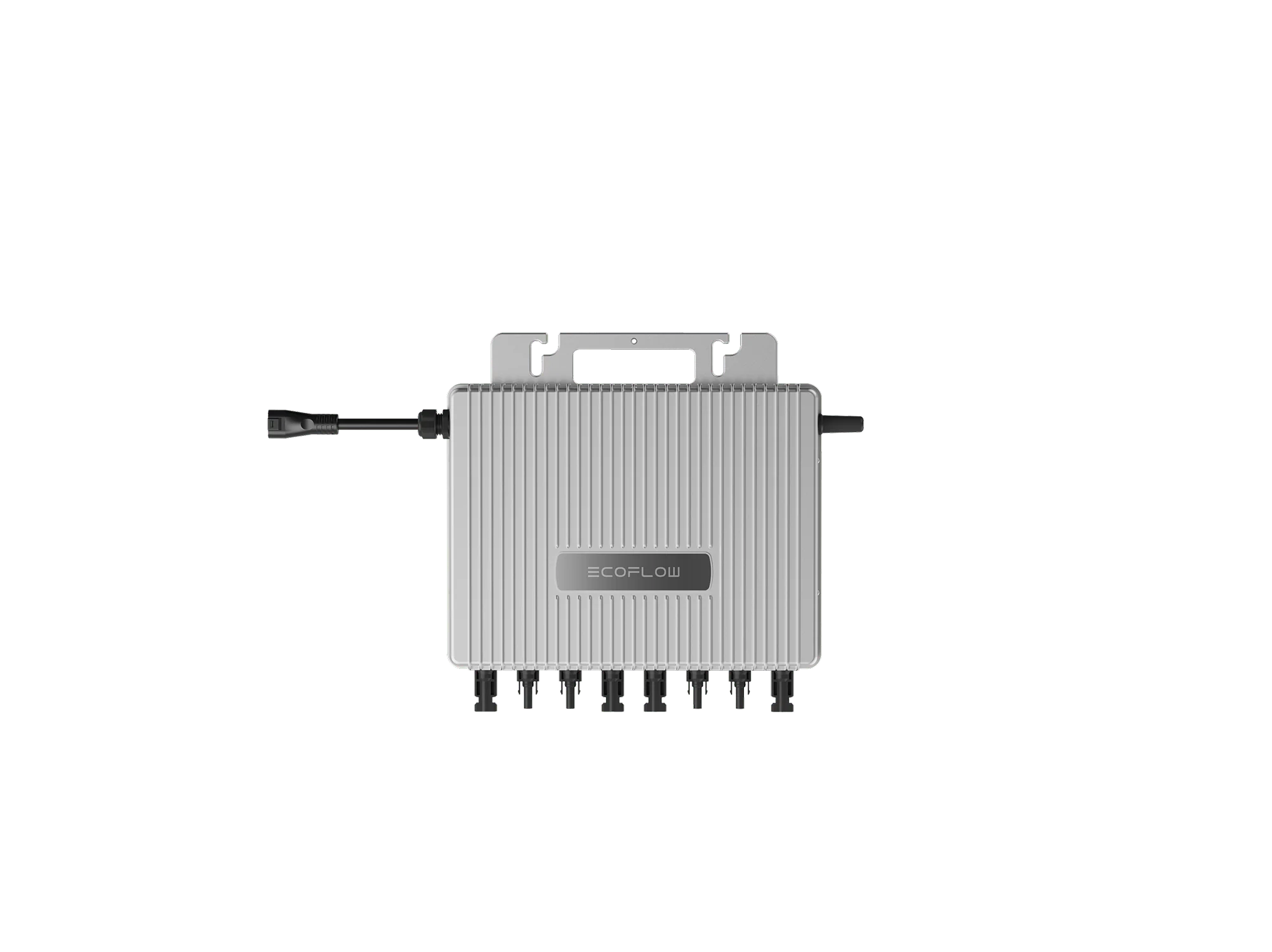
Plug-and-play systemPart of EcoFlow's plug-and-play home solar system launched May 2025. Supports up to 1,200W output, designed for apartments and condos, starts delivering power with as little as 3W of solar input.
Hoymiles HMS Series
European-origin, US expandingUsed in many international plug-in solar kits, gaining US market presence. Always verify UL 1741 certification on any specific Hoymiles model before purchasing.
Do You Need to Buy a Microinverter Separately, or Is It Already in the Kit?
Most plug-in solar kits come with a microinverter already included. When you buy a complete kit, the microinverter is part of the package, pre-matched to the panels and ready to plug in. For most first-time buyers, that's the simplest path: everything is sized to work together, the documentation is clear, and if anything goes wrong, you have one point of contact. See exactly what's included in a plug-in solar kit before you buy.
Some buyers purchase panels and microinverters separately for more flexibility in sizing. If you go that route, verify the microinverter's input specs match your panel's output instead of assuming any panel will work. The APsystems EZ1-LV handles panels up to 60V open-circuit voltage and 14A short-circuit current per input. A panel under both limits is in range. A panel above either number is not, even if the connectors physically fit.
This is also where full plug-and-play solar kits are usually easier for renters, apartment dwellers, and first-time buyers. You are not just matching voltage and current — you are also checking connector type, cable length, mounting hardware, and whether the final balcony solar or backyard setup still fits your state's permit and utility notification rules.
To see how the microinverter fits into the full plug-in solar picture, including how your savings get calculated, read our complete guide to how plug-in solar works.
Frequently Asked Questions
Common questions about microinverters and plug-in solar.
Ready to see what a microinverter system could save you?
Enter your zip code and monthly electricity bill. Our calculator uses real solar data for your location to estimate your savings.
Last updated: April 22, 2026. Information on this page is reviewed quarterly for accuracy.